

Window replacement in Fort Worth requires a City building permit for exterior openings. The area needs ENERGY STAR-rated glass that meets South-Central climate requirements, such as a U-factor that is 0.28 or lower and a Solar Heat Gain Coefficient of 0.23 or lower.
Storm Guard of Fort Worth handles permits, specifies the glass, and checks for hail damage that may be claimable. As a restoration contractor, our crew looks at your windows the way an adjuster does.
We serve Fort Worth, Keller, Haslet, Saginaw, Alliance, and Eagle Mountain. Schedule a consultation, and we measure before we quote.
According to the City Development Services, Fort Worth requires a building permit when replacing or adding doors, windows, or burglar bars. This requirement is not to make homeowners’ and business owners’ lives harder, but to make spaces safer.
Before hiring a contractor, know whether they can pull the permit for you. If a company says you don’t need one or tells you to file it yourself, ask them to explain why. A good contractor should be able to walk you through the process of acquiring a permit.
Roofing rules can add to the confusion. Under city guidance, shingle-only work does not require a permit, while replacing decking, lathing boards, sheathing, rafters, or ridge boards does. Windows do not have the same exemption. Window replacement in Fort Worth, Texas, requires a permit for exterior openings.
To secure a permit for historic and design districts, you may need more approvals than usual. Window design could top that list. So, if you own a home in Fairmount, Ryan Place, or another designated district, it’s best to check the requirements first. The staff certified to review designs can be reached at 817-392-8037.
Keep in mind that jurisdiction varies. Keller, Haslet, Saginaw, and Blue Mound have their own distinct building departments. Thus, requirements can differ depending on your address. Work without permission might lead to problems when the property is inspected at the time of resale.
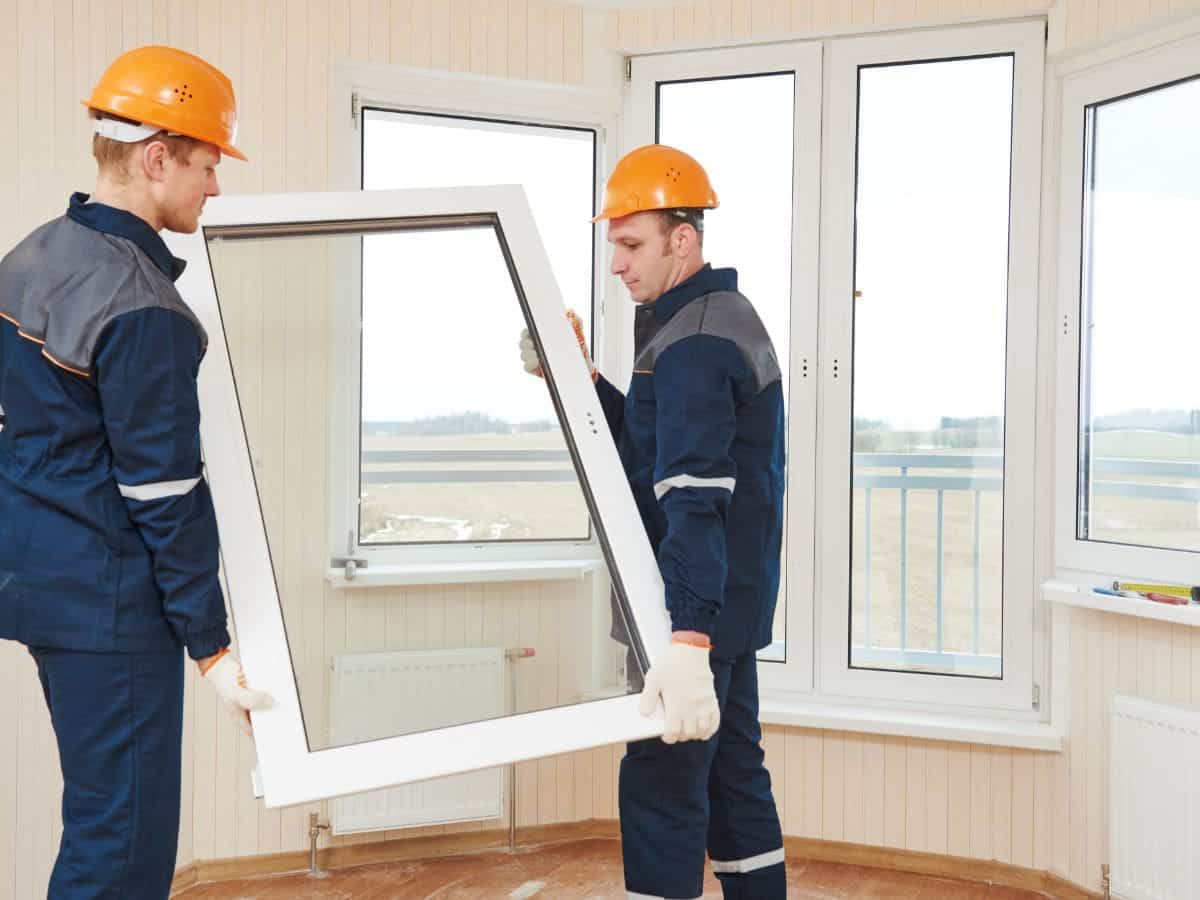
Tarrant County falls within the South-Central climate zone as defined by ENERGY STAR. According to Version 7.0, effective October 2023, windows that have been certified for this zone must have a U-factor of 0.28 or below and a Solar Heat Gain Coefficient (SHGC) of 0.23 or below.
U-factor measures heat loss while SHGC shows how much solar heat enters through the glass. Because Fort Worth is cooling-dominated, SHGC can have a bigger effect on summer energy use. When comparing quotes, ask about SHGC first.
All windows that have been certified come with a label supplied by the National Fenestration Rating Council (NFRC), which gives standardized ratings of window performance. This label includes the U-factor, the SHGC, the visible transmittance, and the air leakage figures. Request these figures in writing and, if the glass specification is not included in the estimate, ask the contractor to include it.
Usually, no. Triple-pane glass primarily improves U-factor, which matters less in this cooling-dominated climate. A quality double-pane window with a solar-selective low-E coating and argon fill can typically meet the South-Central requirement. Your budget may be better spent on the coating and installation.
A drawback is that glass with a very low SHGC can reduce the amount of visible light; solar-selective coatings are useful for blocking heat without compromising brightness. Instead of asking about the number of panes, ask what coating the window employs.

These are the styles that Storm Guard uses for home window replacement projects in Fort Worth, and where each one works best.
When homeowners in Fort Worth are looking at replacing their windows, there are five kinds of frame materials to consider; the main point being the way each one copes with months of direct sun in North Texas.
| Material | Heat and Sun | Maintenance | Limitation |
|---|---|---|---|
| Vinyl | Low heat conduction | Minimal | Quality varies; dark colors absorb more heat |
| Fiberglass | Expands similarly to glass, helping seals withstand heat cycling | Low; paintable | Costs more; fewer suppliers |
| Composite | Wood fiber and polymer provide temperature stability | Low | Performance varies by formulation |
| Wood-clad | Exterior cladding protects the wood interior | Interior refinishing | Highest cost: cladding breaches can expose wood to water |
| Aluminum with thermal break | Reduces heat transfer through the frame | Very low | Untreated aluminum conducts heat directly through the wall |
New windows can recover a significant part of the amount they cost when they are resold. However, the specific figures vary depending on the year, material, and market situation. Rather than providing an outdated percentage, consult the current Cost vs. Value report.
Tarrant County has one of Texas’s highest severe-hail counts. Hail across Texas in May 2024 caused more than $2.3 billion in damage, according to NOAA.

Glass is not the only part of a window that is vulnerable to damage caused by hail storms. Hail can crack frames, tear screens, damage the glazing beads, and break the seals. Fog between the panes might show up months later because of broken seals. All of these are considered hail damage. Just because your window is not broken, it doesn’t mean you cannot file an insurance claim.
Take photographs of the damage, inform your insurance company of it, and submit a damage assessment report to the adjuster. Since windows are usually inspected together with the roof, some contractors are qualified to inspect both.
At Storm Guard, we record the damage, give a valuation, meet the adjuster, and carry out the work in accordance with the approved scope.
While we are not involved in making adjustments, negotiating, or submitting the claim, our documentation process adheres to the standard protocols that most insurance companies provide.
Schedule a consultation, and we will assess the windows during the roof visit.

The window replacement should proceed in order. It begins with the first set of measurements and ends with ensuring it passes the city’s standards. The following describes what you can expect at each stage, outlining our responsibilities and the actions that are carried out at your home.
We measure every opening to ensure proper fitting.
Glass and frame details, including NFRC figures, go on the quote.
We file a permit with the building department that governs your area.
Units are built to measured openings, with a lead time of around two weeks or more.
A crew typically completes 6 windows or more per day for retrofit replacements, and 3 windows or more per day for full-frame replacements.
A certified inspector from the city evaluates the window installation.
We review the completed work with you.
In all our window installation projects in Fort Worth, TX, we use only high-quality materials, work one opening at a time, and sweep for fasteners before leaving.
A consultation with a certified Fort Worth window installer, like Storm Guard, includes measurements and a written quote. No same-day-only pricing, lengthy presentation, or pressure to sign. Manufacturer and Storm Guard installation warranties are provided in writing before work starts.
Did the storm damage more than your windows? Storm Guard offers exterior services in Fort Worth that you might need.
Ready to see the numbers for your house? Schedule a consultation. A Storm Guard project manager will measure every opening and check for storm damage when on site. Financing options are available. Call (817) 618-5541.
That's right, you do. In Fort Worth, a building permit is needed if you want to replace or add exterior doors, windows, or burglar bars. The contractor is the one who should obtain it.
There is no useful average for Fort Worth window replacement. Cost depends on the number of openings, whether it's an insert or a full-frame replacement, frame material, and glass package. Anyone quoting a price before measuring is guessing. A consultation provides a written estimate.
It can, depending on your policy and the adjuster’s findings. Hail damage may appear as cracked frames, damaged screens, or failed seals rather than broken glass. Document the damage, report it to your carrier, and provide the adjuster with the assessment.
Tarrant County is in the South-Central climate zone. Under ENERGY STAR Version 7.0, certified windows need a U-factor of 0.28 or lower and a Solar Heat Gain Coefficient of 0.23 or lower. Check the SHGC first.
Most of the time, they aren’t. This is because triple glazing mainly has an effect on the U-factor, something that is of less importance in Fort Worth due to its cooling-dominated climate.



Unless otherwise noted, each use of "Storm Guard," “us,” “we,” or “our” throughout Stormguardrc.com collectively refers to both the Storm Guard brand and the Storm Guard Franchise System, which is made up almost exclusively of independently owned and operated franchise locations.

