
Most commercial roofing services in Fort Worth, TX come down to four types: repair, recover, coat, or replace. The right choice depends on the existing roof layers, the condition of the insulation, and whether the issue is isolated or widespread.
Storm Guard Roofing of Fort Worth works on low-slope and metal commercial roofs across Fort Worth and Tarrant County. We assess the roof before recommending a path forward, looking for moisture, membrane damage, drainage issues, and other conditions that need to be addressed.
This page explains what we look for and when each option makes sense, so you can understand the reasoning behind recommended actions. Schedule a consultation when you want your roof evaluated.
When the roof of your business establishment or commercial space is having issues, and you are unsure whether it needs repair, recovery, a full replacement, or just a new coating, you can use this guide to determine which option suits your roof best.
Option |
When it applies |
What rules it out |
Typical outcome |
|---|---|---|---|
Repair |
Failure is confined to a detail: a curb, seam, drain, flashing |
Widespread seam separation, membrane shrinkage, or field-wide saturation |
Targeted fix; the rest of the roof carries on |
Recover |
One existing covering, dry insulation, and sound deck |
Two or more existing coverings, or a water-soaked or deteriorated substrate |
New membrane over the existing roof, no tear-off |
Coating |
Deck and insulation sound, slope drains properly, membrane weathered but intact |
Wet insulation, standing water, field-wide leaks |
Added service life to the roof you already have |
Full replacement |
Conditions rule out the other three |
Nothing, this is what the tests leave |
Remove existing roof coverings and install a new system |
A repair makes sense when failure is limited to a curb, seam, drain, or flashing. For commercial roof repair in Fort Worth properties, the goal is to address the affected area without replacing a roof that remains otherwise sound.
The city of Fort Worth complies with the 2021 International Building Code (IBC); however, Section 1511.3.1 excludes the possibility of carrying out a recovery when there are already two roof coverings in place, as well as when the roofing is water-soaked or has deteriorated.
A fluid-applied coating is capable of extending the life of a roof provided that the deck and insulation are in good condition, drainage functions properly, and the membrane stays intact. It does not serve as a solution for wet insulation, standing water, or widespread leaks.
Replacement may be necessary when two coverings are already in place, insulation is saturated, or failure extends across the roof field. The lower-cost option may not be available.
Commercial roof replacement costs vary by roofing system, installation method, and site conditions. An assessment can determine the approach and investment.
Our approach to Fort Worth commercial roofing starts with the building itself. We choose the system based on building use, deck type, slope, and drainage.
| System | Typical building | Key strength | Main watch-out |
|---|---|---|---|
| Thermoplastic polyolefin (TPO) | Warehouse, retail, light industrial | Heat-welded seams and a reflective surface can reduce cooling load | Weld consistency affects seam performance, making installation quality critical |
| Polyvinyl chloride (PVC) | Restaurants, food processing, grease exposure | Heat-welded seams and strong chemical resistance | Specify it for the exposure rather than by default |
| Modified bitumen | Heavy roof traffic or complex penetrations | Multi-ply construction tolerates traffic and detail work | Heavier system; surfacing weathers under ultraviolet exposure |
| Metal | Industrial buildings, canopies, steep-slope sections | Long service life with multiple profiles and colors | Inspect fasteners and flashing for deterioration |
Single-ply membranes cover most low-slope roofs in this market. Modified bitumen can make sense where foot traffic requires a more robust surface. Commercial metal roofing in Fort Worth offers durability and a range of style options, but fasteners, seams, and flashings require regular inspection.
Commercial roof repair is usually a matter of attention to detail, involving things such as seams, curbs, parapet flashings, drains, and scuppers; it is important for a useful condition report to include photographs of those areas rather than just giving them a summary line.
Treat quoted energy savings carefully. The U.S. Environmental Protection Agency reports that cool roofs can reduce peak cooling demand by 11% to 27%, but that figure applies to air-conditioned residential buildings, not commercial low-slope roofs. For commercial roofing projects in Fort Worth, the Department of Energy's Cool Roof Calculator provides a more appropriate evaluation.
Schedule a consultation, and we will assess what your roof can realistically return.
Tarrant County ranks among the counties with the highest counts of severe hail days in Texas, based on analysis of National Oceanic and Atmospheric Administration (NOAA) storm records.
Hail can damage the membranes that cover soft or wet insulation, cause fractures in the modified-bitumen surface, split the seams, dent the metal panels, and crush the drains or vent caps. In some cases, the damage might not result in a leak, so it could easily go unnoticed until there is heavy rain.
The membranes tend to shrink with time, causing them to pull on the parapet and curb flashings. The adhesives weaken, and since the material expands and contracts, the fasteners can become loose. Although these issues may not always be obvious, they can be identified when the system is inspected.
In low-slope systems, standing water accelerates deterioration and is more likely to indicate a problem with the slope or drainage than a failure of the membrane. Proper drainage is important no matter what the material is.
Commercial roofing contractors in Fort Worth should evaluate the condition of drains, vegetation, debris, tree damage, weather exposure, deferred maintenance, and previous repairs. If a storm opens the roof, emergency roof tarping in Fort Worth can protect it while work is scoped. Our office answers around the clock, and crews respond once conditions are safe.
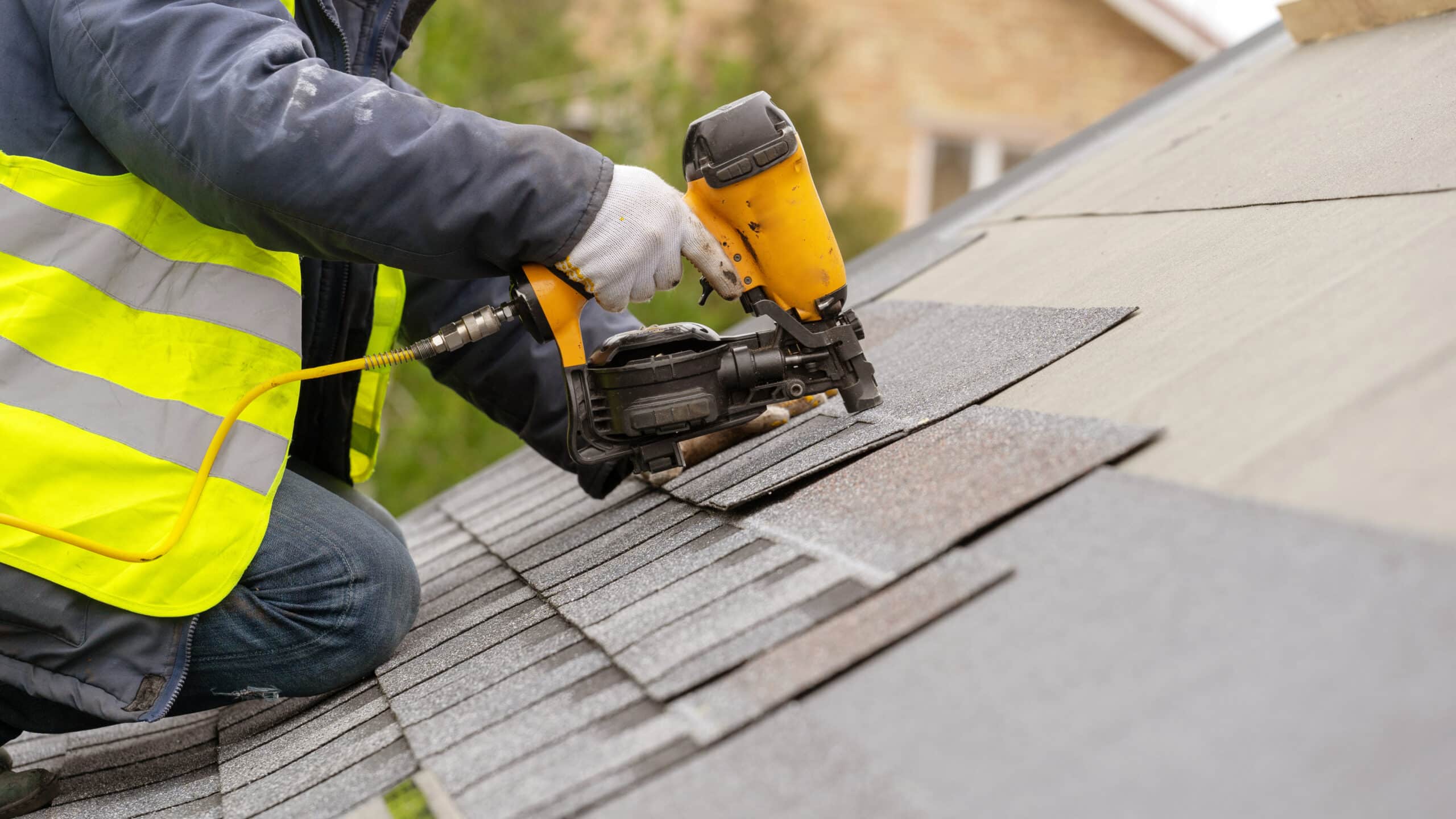
All commercial roofing projects begin with a thorough understanding of the roof's present state and the various options on offer. Throughout the entire process, from the first assessment to the final walkthrough, we make sure that it remains clear, properly documented, and well-coordinated around your business.
The entire roof is photographed, showing the membrane area, the seams, the flashings, the curbs, the penetrations, the drains, and the perimeter. Assessments of any damage are provided free of charge and involve no initial obligation.
Infrared or thermal scanning is not available at this site, so any suspected moisture is determined by taking core samples. These findings provide a baseline against which repair, recovery, coating, or replacement options can be compared.
You receive a written condition summary explaining which options are best, which are ruled out, and why. This gives Fort Worth commercial roofing contractors a documented basis for explaining whether repair, recovery, coating, or replacement makes sense. Layer count and moisture findings drive those decisions.
Scope, materials, sequencing, and safety protocols are agreed upon before the crew arrives, with a named point of contact. Roof access and staging areas are set in advance; customer and tenant access is maintained; working hours are planned around the business and operating plans; and the entire site is left clean each day.
We will go through the finished work with you. We will carry out the paperwork and deal with the warranty documentation. Before we close the project, we will look over any remaining questions. That includes looking into maintenance notes and the next steps before confirming what comes next for your roof. For full roof jobs, Storm Guard provides a workmanship warranty on installation and passes through the manufacturer's material warranty. Repair work is handled on a case-by-case basis.
Storm Guard applies its experience to make the insurance process easier once a claim is filed. The team understands the documentation carriers and adjusters commonly expect and uses estimating software consistent with industry workflows.
We supply photographs with geographic tags and maintain a uniform condition record for the roof. Then, we provide an estimate of output in the formats that carriers use. Being consistent makes it easier to compare buildings and spot differences in scope.
Storm Guard completes the work and documents the loss. We are not licensed adjusters, so we do not interpret policy language and do not negotiate settlements. That boundary is important: we can document the damage and provide project information without acting as your insurance representative.
The contents included in the carrier's statement of loss determine whether the work is classified as a repair or a replacement. Carrying out accurate layer-count and moisture documentation right from the beginning is essential.
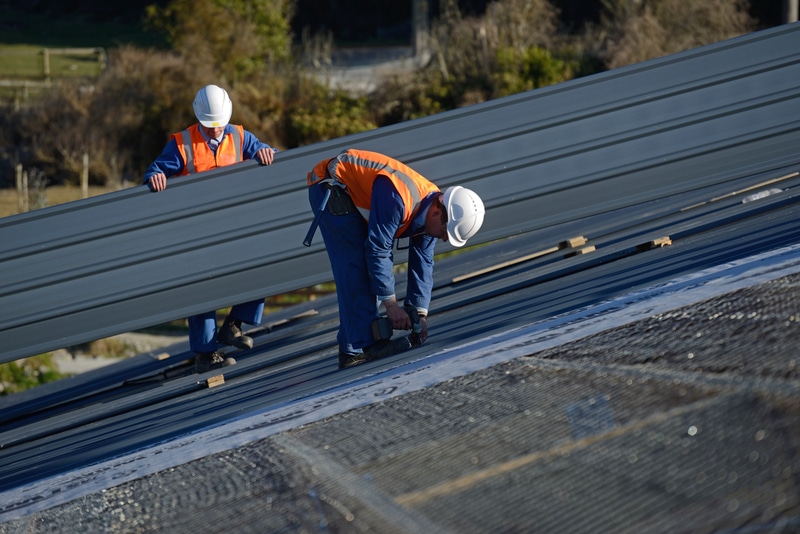
Texas does not issue a state roofing license, so contractor credentials are voluntary. The Roofing Contractors Association of Texas runs a voluntary licensing program. When comparing commercial roofing companies in Fort Worth, ask contractors for their credentials and request proof of general liability and workers’ compensation coverage.
Storm Guard Roofing of Fort Worth is locally owned and operated from 5000 Overton Plaza, backed by a national network with more than two decades of storm restoration experience.
The correct course of action for a commercial roof should be decided when on the roof, not in the quote; it is the number of layers, the condition of the insulation, and whether the failure affects just one area or the whole roof that decide if a repair, a recovery, a coating, or a full replacement is necessary.
Storm Guard records the conditions, explains the provisions of Fort Worth’s building code, which indicate what is allowed and what is not, and gives a written rationale for the decision. The assessment is free of charge and involves no obligation, so you can look over the findings before deciding whether or not and when to proceed.
When you are ready to know where your roof stands, schedule a consultation.
A Storm Guard project manager will walk the roof, document the existing conditions, and provide you with a written summary of the condition and options. If you are evaluating a commercial roofing company in Fort Worth, TX, the assessment gives you a documented starting point.
The assessment costs nothing, and there is no obligation. Call (817) 618-5541 to speak with our local team in Fort Worth.
Commercial roof replacement cost depends on the roofing system, installation method, roof size, access, and site conditions. Each project is different, so a professional assessment is the best way to determine the appropriate approach and investment. Storm Guard assesses the roof before discussing a figure.
It depends on the case. Fort Worth enforces the 2021 International Building Code (IBC). Section 1511.3.1 does not permit a roof recovery where two or more roof coverings are already in place or where the existing roof is water-soaked or deteriorated. A site assessment determines which option applies.
Service life depends on the system, drainage, and maintenance history. Regular inspections and maintenance can extend service life, while hail exposure across Tarrant County can shorten it. When comparing commercial roofers in Fort Worth, ask how they evaluate drainage, existing layers, insulation, storm damage, and maintenance history rather than relying on system age alone.
Your carrier makes that decision. Storm Guard does not interpret policy language or negotiate settlements. We document the loss with geotagged photographs and estimate output in formats carriers use.
Yes. Roof access, staging, and working hours are planned before work begins. Customer and tenant access is maintained, and the site is cleaned each day.
Texas does not issue a state roofing license. When comparing commercial roofing contractors Fort Worth businesses may hire, ask about the credentials they hold, and request proof of general liability and workers’ compensation coverage.

Unless otherwise noted, each use of "Storm Guard," “us,” “we,” or “our” throughout Stormguardrc.com collectively refers to both the Storm Guard brand and the Storm Guard Franchise System, which is made up almost exclusively of independently owned and operated franchise locations.