Storm Guard Roofing of Madison


A storm can tear a roof open in minutes, and emergency roof tarping in Madison is how you close the gap before water works its way inside. Storm Guard sends our local team to cover the damaged area so water stops getting in, record the damage, and map out the permanent repair. From the first call onward, you have a clear next step.
Dealing with storm damage can be stressful, but an emergency tarp service can quickly secure your home. Storm Guard follows a simple four-step process to assess the damage, protect your roof, and help you with long-term repairs.
Our team is available 24/7 to take your call and set up an appointment. When you call, we ask a few quick questions about what happened and where the damage is located. Then, we schedule a visit to your home right away. You will leave that first conversation knowing that a clear plan is in place.
We evaluate the whole picture before placing a tarp. Our team thoroughly checks for missing shingles, punctures, lifted flashing, and ridge damage. We pinpoint every opening and plan our tarp placement to effectively keep water out so your home is completely protected.
Before the tarp conceals the affected areas, we document the damage we found in our assessment. We take geotagged photos and write a clear, concise summary of our findings. This documentation gives you complete clarity on your roof’s condition and serves as your reference for what the storm damage looks like.
We install a heavy-duty tarp that is strong, reinforced, and weather-resistant. The tarp we use is always larger than the damaged area needing cover. We secure it so that wind cannot lift it, and we angle it to ensure that water runs off rather than pooling on top. We also take photos of the tarp installation to add to the storm damage documentation. With your home temporarily secured, you can decide on your next steps at your own pace.
Not every storm-damaged roof needs a full tarp. After assessing the damage, we will recommend whether your roof needs a targeted repair when the opening is small or a tarp for broader coverage until a permanent fix.

If your roof has only a few missing shingles or a lifted piece of flashing, a repair might be enough. In these cases, our emergency roof repair in Madison can quickly restore your roof's watertight condition. Our team will suggest a temporary roof repair only after inspecting the damage in person, as the best solution depends on what they find.

A tarp is the right first step when damage is severe, like a fallen tree branch, a large opening, or active leaks during heavy rain. Our immediate goal is to cover your roof and safely direct rainwater away. Once your home is secure, we return for permanent repairs. Our crew works efficiently to minimize disruption, so your day stays as normal as possible.
A tarp is not a repair; it is there to buy you some time while the roof waits for the permanent work it needs. As soon as conditions allow, we carry out a full inspection to assess the full extent of the damage. We then create a clear plan for your permanent storm damage roof repair or a full replacement if the roof is beyond repair. From there, we schedule the work around you.
Our local team of experts at Storm Guard Roofing of Madison guides homeowners across Dane County through this exact process, ensuring a smooth transition to full restoration.
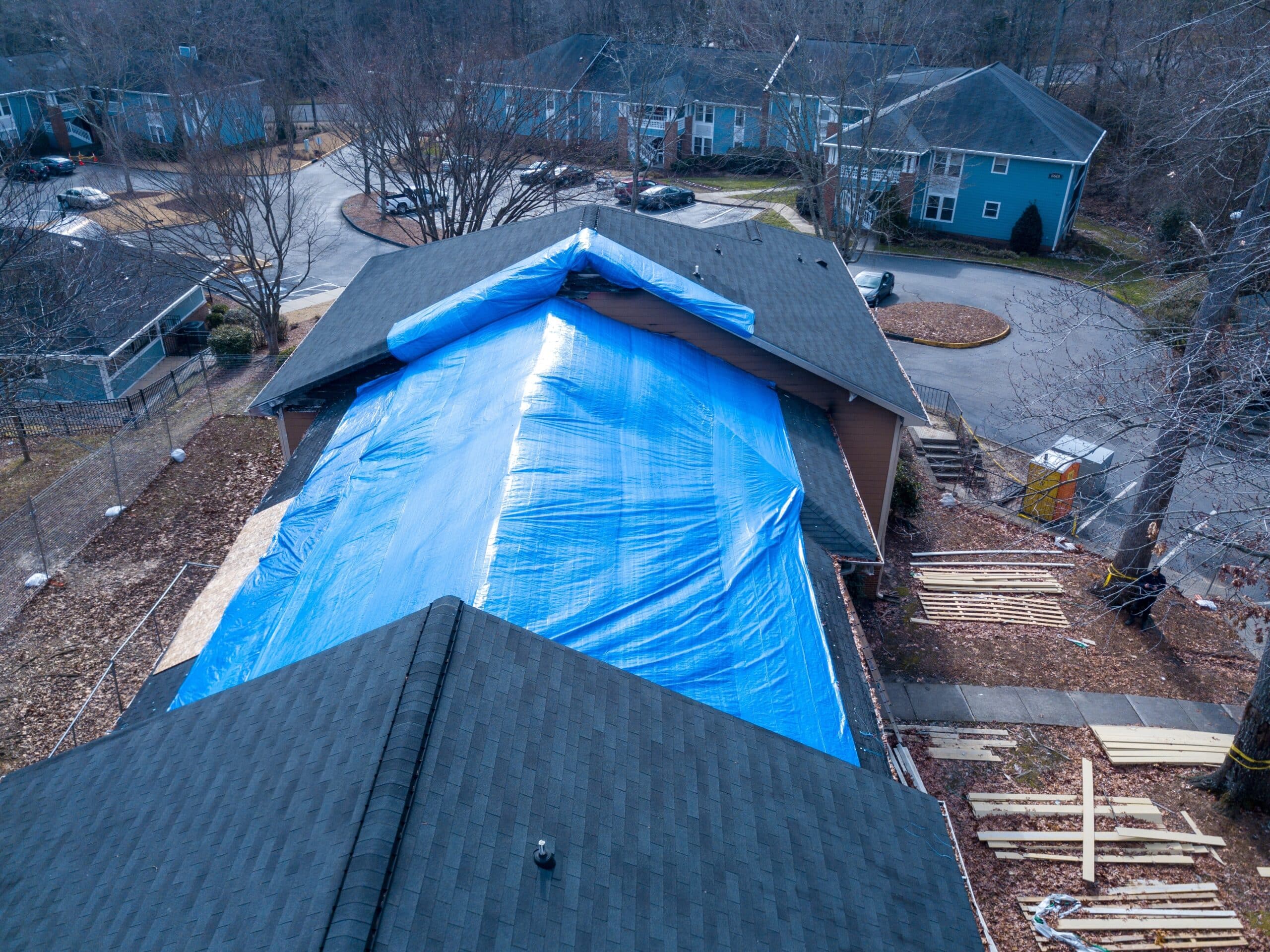
A roof tarp prevents rain from reaching the decking, insulation, and ceilings below, where it can cause the most damage once the roof is opened. A crew installs the tarp instead of leaving it to you because the work occurs on a wet, damaged roof. Sometimes, fallen tree limbs can make the surface uneven, and the tarp needs to be secured to withstand the Wisconsin wind. Doing this correctly requires ladder and roof safety training that most homeowners lack.
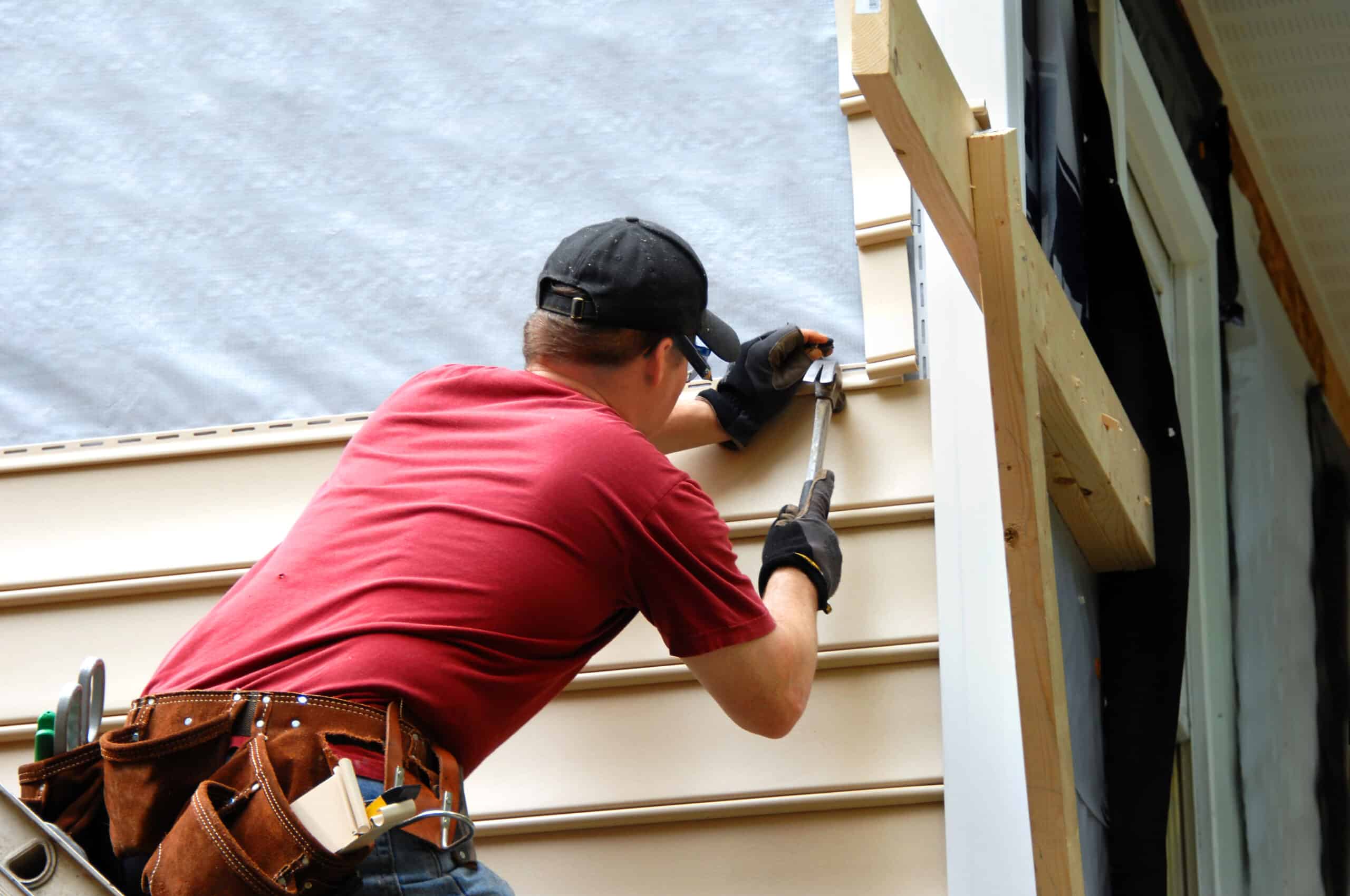
When a storm damages a wall, a cover goes over the siding to prevent rain from getting inside. Moisture can stay in the wall long after the storm passes, so a temporary cover helps protect it until the siding can be fixed. The crew measures the opening and carefully secures the cover, just like they do with a roof.










Our lines are open 24/7, and our team can tarp as soon as weather conditions are safe for roof work. Emergency roof tarping in Madison cannot proceed during active lightning or high winds.
On average, a tarp can stay on the roof for 30-90 days. Since it is only a temporary cover that protects your roof until a permanent repair can be made, we highly recommend scheduling a repair as soon as you are ready.
Yes, though extra precautions are taken. Snow and ice make a roof slick, so the crew goes up only when the surface is safe. Ice dams at the eaves can also shift where water enters, which the crew checks before the tarp goes down.
Stay inside and keep yourself safe first. Move belongings aside, put a bucket under the drip, leave the roof alone, then call for an emergency roof leak repair. During a lightning storm, wait it out indoors; the National Weather Service has guidance on staying safe during a storm.
A few interior signs point to an opening overhead: a new stain or drip on the ceiling after a storm, attic insulation that feels damp, or daylight showing through the roof boards. Any of these means water can get in, and a tarp can seal it off until repairs are made.
Keep clear of the broken glass. If it is safe, cover the opening from the inside to keep out the wind and the rain, then call us. We do not tarp windows, but we can guide you toward the right fix.
Yes, replacement is the usual path for a storm-damaged window. Rather than patching a failed unit, we install a new one, restoring the seal and appearance in a single step.
Look for cracked, loose, or missing panels, and for spots where the sheathing underneath is showing. High winds can pull siding from the wall or crack it outright, and once a panel is gone, the layer beneath is open to the weather.
After we assess the damage and once the wall is covered, we move to the permanent fix. Either siding repair or replacement is scheduled once the area is dry and the scope is clear.
Storm damage shows up in a few ways you can spot from the ground. After hail and wind damage, look for bruised shingles and granule loss, shingles that are lifted, creased, or missing, punctures from falling limbs, and flashing bent out of place.
Yes, because not all damage is obvious. Bruised shingles can look minor from the ground, but can start leaking weeks later as the surface breaks down. It is worth asking the professionals. Schedule a roof inspection to catch those spots early.
For siding, yes, and the emergency siding tarp described above does exactly that. Windows are different: we do not tarp or board windows, so for a broken window, see the Windows tab. The siding cover keeps the wall dry; the window needs its own fix.
We use heavy-duty, weather-resistant tarps built to withstand wind, rain, and sun. The material is reinforced so it does not tear under pressure, and it is fastened so it stays put rather than working loose. The aim is to provide a cover that lasts until the permanent repair is completed.
Yes, in a few ways. Hail can chip paint, wind-driven debris can scuff it, and moisture behind damaged siding can make paint peel from the inside out. Once the repairs are done, repainting the affected areas restores a consistent finish.
Often, yes, to blend the repaired areas into the rest of the house. New trim or wood siding takes paint or stain, so the fresh work does not stand out against weathered surfaces. Our exterior house-painting page covers the final step.


Unless otherwise noted, each use of "Storm Guard," “us,” “we,” or “our” throughout Stormguardrc.com collectively refers to both the Storm Guard brand and the Storm Guard Franchise System, which is made up almost exclusively of independently owned and operated franchise locations.