

For most St. Louis homes with mature trees, yes, and the math is straightforward. Professional gutter cleaning here typically runs 150 to 300 dollars per visit, and a wooded lot needs three or four visits a year. Quality guards installed generally run 8 to 20 dollars per linear foot depending on the system, which means 1,600 to 4,000 dollars on a typical 200-foot home. On a heavy-debris lot that pays back in roughly four to seven years and keeps paying after that. On a house with no overhanging trees, guards are a much weaker investment and we will say so.
A blocked gutter overflows against the house, and in St. Louis that water ends up in a basement or against a foundation more often than not.
Guards do not eliminate maintenance, they change it from clearing packed debris to a seasonal check.
Standing water and packed wet debris corrode the trough and pull hangers out of the fascia over time.
Clogged gutters are one of the leading causes of basement water intrusion across St. Louis and Jefferson County.
Most rotted fascia we replace in this market traces back to a gutter that overflowed for several seasons.
Debris that holds water freezes, and that ice loads the gutter and pushes meltwater back under the shingle edge.
There are four guard types worth considering in St. Louis, and the deciding factor is what is overhanging your roof. Fine debris such as oak tassels, maple seeds and roofing granules defeats coarse screens. Sweetgum balls and heavy leaf litter defeat fine mesh that has not been pitched correctly. Here is the honest comparison:
Pros
Fine stainless micro-mesh stops pine needles, oak tassels, maple seeds and roofing granules, the strongest performer on fine debris
Cons
Needs an occasional rinse, and a poor pitch will let water run past it in a hard rain
Pros
Rigid aluminum hood sheds sweetgum balls and wet hardwood leaves, resists UV and rust, and handles high-volume flow
Cons
Higher upfront cost, and it is visible from the ground on a low roofline
Pros
Aluminum or plastic screens are budget-friendly and quick to fit
Cons
They clog with fine debris, blow out of the hanger in high wind, and disappoint under mature hardwood canopy
Pros
Foam and brush inserts cost the least and stop large leaves
Cons
They hold moisture and seed debris inside the trough, which accelerates corrosion, so we rarely recommend them here
Our gutter guard installation follows the same four steps every time, because the failures in this market come from skipped steps rather than bad products.
We start on the roof and in the gutter, not in a brochure. We identify what is actually overhanging your house, oak, sweetgum, sycamore, pine or nothing at all, and we check the existing gutter for pitch, hanger condition, seam leaks and fascia rot. Guarding a failing gutter just hides the problem, so if something needs fixing first we tell you before we quote the guards.
This is where most installs go wrong. Micro-mesh for fine debris and granules, a rigid aluminum hood for sweetgum and heavy leaf litter, and honest advice when neither is worth the money. Roof pitch matters too: a steep roof in Wildwood throws water with enough velocity to overshoot a poorly angled guard, so the product and the pitch have to be chosen together.
Guards are only as good as their fit. We set the angle so water is drawn into the trough by surface tension rather than launched past it, seal the transitions, and fasten without compromising the shingle edge or voiding your roof warranty. We do not lift shingle courses to slide a guard underneath unless the manufacturer specifically calls for it.
Before we leave we run water across the roof and watch where it goes, which is the only way to know a guard is working rather than assume it. Then we clear the site and leave you with the product warranty and what it actually covers in plain language.
We install two systems we are confident recommending in this market. If you are unsure which fits your house, the trees over it decide, and we are happy to walk you through the difference on site.
Gutter Dome is rigid aluminum with a pitched hood, and it is our recommendation for the mature hardwood canopy across much of St. Louis. It sheds sweetgum balls, oak leaves and roofing granules while carrying the flow volume a heavy Missouri cell produces, and the aluminum holds up to UV and hail far better than plastic.


EZ Lock micro-mesh is the right answer for fine debris: pine needles, oak tassels, maple seeds and shingle granules that walk straight through a coarse screen. It retrofits onto most existing gutters without replacing them, which keeps the cost down, and our installers set the pitch so water is not running past the mesh in a downpour.
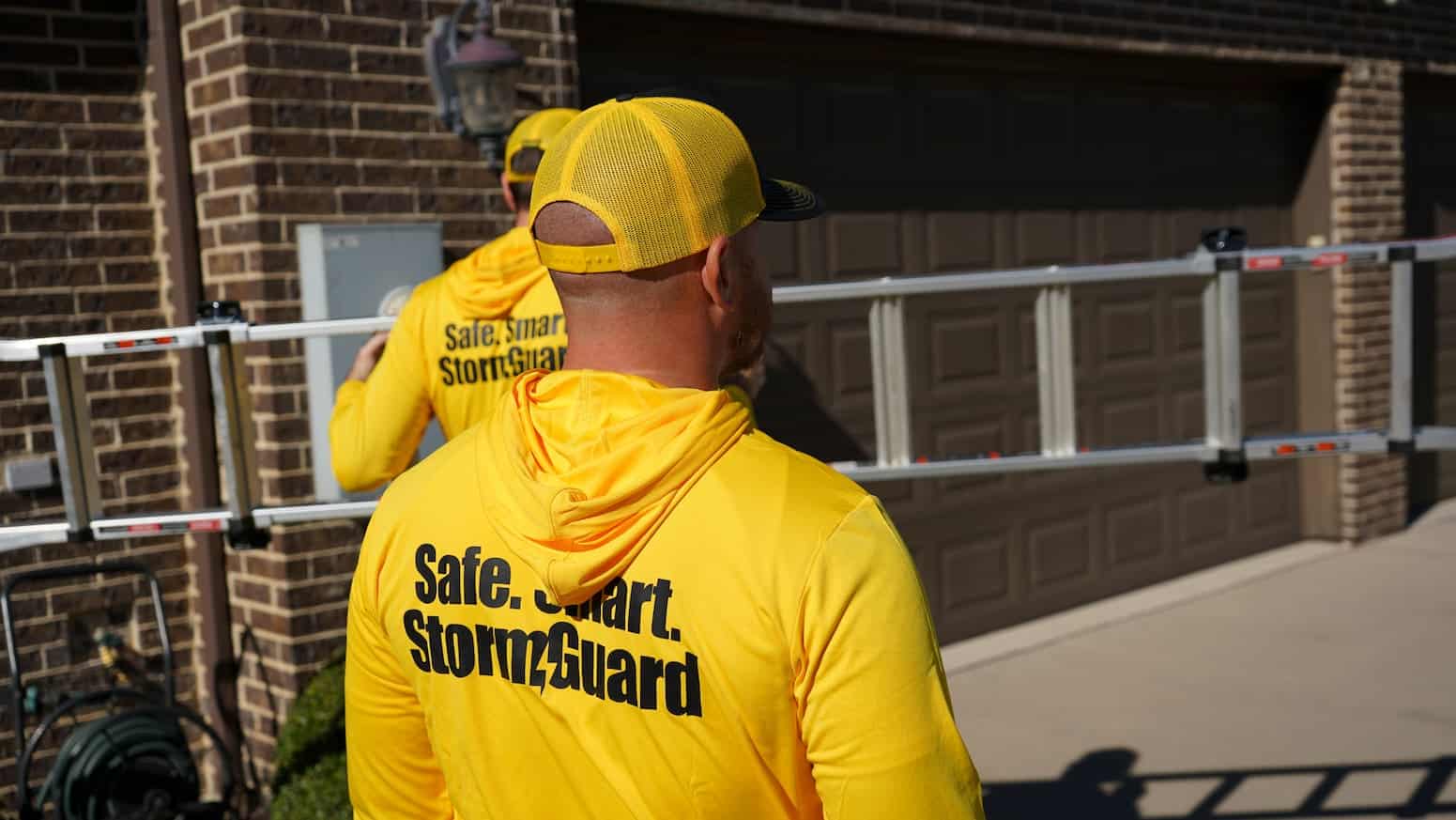
A roof decision should be settled by what is on the roof, not by whichever contractor sounded most sure. You should finish knowing what is wrong, which path the condition supports, what code requires, and what you will hold in writing when the crew leaves. In Winston-Salem, that starts with a free assessment.
A free assessment for your Winston-Salem home, with no obligation and no upfront investment. We will inspect the roof, document what we find, and put the options in front of you in writing.







Professionally installed gutter guards in the St. Louis area generally run 8 to 20 dollars per linear foot, which puts a typical 200-foot home between roughly 1,600 and 4,000 dollars. Micro-mesh and rigid aluminum hood systems sit at the higher end, basic screens at the lower end. Two-story access, steep pitch and existing gutter repairs move the number up. For comparison, professional cleaning here runs about 150 to 300 dollars a visit, so a wooded lot needing three or four visits a year is spending 450 to 1,200 dollars annually on cleaning alone.
They are worth it on a house with overhanging trees and a poor investment on a house without them, and any contractor who tells you otherwise is selling rather than advising. Under mature oak, sweetgum or sycamore, guards typically pay back in four to seven years against cleaning costs, and they prevent the expensive failures: basement water, rotted fascia and foundation issues. On an open lot with no canopy, twice-yearly cleaning is cheaper. We will tell you which situation you are in before we quote.
For sweetgum balls and heavy wet oak leaves, a rigid aluminum hood such as Gutter Dome performs best because it sheds bulk debris off the front rather than collecting it on a surface. For fine debris, oak tassels in spring, maple seeds and roofing granules, stainless micro-mesh is the stronger choice. Plenty of St. Louis properties have both, in which case we specify by elevation rather than putting one product everywhere. Screens and foam inserts struggle with either.
Most St. Louis homes are completed in a single day, often in three to six hours for a standard 150 to 250 linear feet. Two-story work, steep pitches and complex rooflines take longer, and if the existing gutters need repitching, rehanging or seam repair first, that adds time. We do the gutter work and the guards in one mobilization so you are not paying twice for setup.
Yes, but far less. No guard is genuinely maintenance-free, and anyone claiming otherwise is overselling. Micro-mesh occasionally needs rinsing where fine silt or pollen builds on the surface, and hood systems need debris cleared off the top edge after a heavy fall. Realistically you move from three or four full cleanings a year to one seasonal check. We show you what to look for so you are not paying someone to tell you it is fine.
In most cases yes, and retrofitting is the cheaper path when your gutters are sound. We check pitch, hanger condition, seams and fascia first, because covering a sagging or leaking gutter locks in the problem where you cannot see it. If the trough is undersized for your roof area, we will tell you honestly that guards are treating a symptom, and a correctly sized gutter replacement is the better spend.
Quality stainless micro-mesh and rigid aluminum systems typically last 20 years or more in this climate, and both Gutter Dome and EZ Lock carry long manufacturer warranties. Plastic screens and foam inserts do not last nearly as long here, because UV makes plastic brittle and foam holds moisture. Hail is the main risk to any guard, and aluminum handles it better than plastic. Ask for the written warranty terms before you buy, from us or anyone else.
Unless otherwise noted, each use of "Storm Guard," “us,” “we,” or “our” throughout Stormguardrc.com collectively refers to both the Storm Guard brand and the Storm Guard Franchise System, which is made up almost exclusively of independently owned and operated franchise locations.