
Asphalt shingles cost less to install. A metal roof usually costs less over its lifetime. The metal roof vs. shingles cost question usually comes down to one key factor: how long you plan to stay in the house.
In Missouri, one other factor matters: hail. This guide compares upfront costs, long‑term value, hail performance, and insurance implications for both materials.
Storm Guard installs both materials, so this is a straight comparison rather than a pitch. If you are planning a reroof or deciding whether to upgrade while a storm claim is open, this is the math to work through first.
At the outset, you’ll find metal roofing costs to be higher than those of asphalt shingles, often by a factor of two. For Missouri reroof installations (including tear-off), typical averages are:
| Roofing type | Cost per square | Lifespan | Trade-off |
| Architectural asphalt | ~$600 | 15–25 years | Lowest upfront cost |
| Exposed fastener metal | ~$900 | 40–60 years | Fasteners need attention |
| Standing seam metal | ~$1,200 | 50–100 years | Highest upfront cost |
This pricing reflects reroof projects that include a full tear‑off rather than new construction. Many variables can affect the final cost.
Without a consistent set of assumptions, roofing costs can vary widely from one project to another. For a standard benchmark, such as a $300,000 home with a 7/12 pitch and a 50-square roof, an architectural asphalt shingle replacement typically falls between $23,000 and $30,000.
As a general rule of thumb, a metal roof may cost roughly 2.5 times more than an asphalt shingle roof. Part of that difference comes from material costs, as the metal roofing materials alone can sometimes approach the total installed cost of a completed shingle roof.
Architectural asphalt is the affordable choice. It installs quickly, most crews are familiar with it, and repairs are generally straightforward. Three-tab shingles can cost more than architectural shingles due to manufacturers moving away from producing three-tab shingles. Three-tab shingles are becoming increasingly uncommon for full reroofs.
Overall, exposed fastener panels are a practical entry point into metal roofing. They can compete on price with asphalt, and the panels screw through the face, making installation faster than standing seam. The trade-off is visible fasteners, which may need periodic attention over time.
Often recommended for main dwellings, standing seam systems can last 50–100 years and conceal fasteners beneath interlocking panels, while exposed fastener systems may require maintenance sooner because the neoprene washers around the fasteners can deteriorate over time.
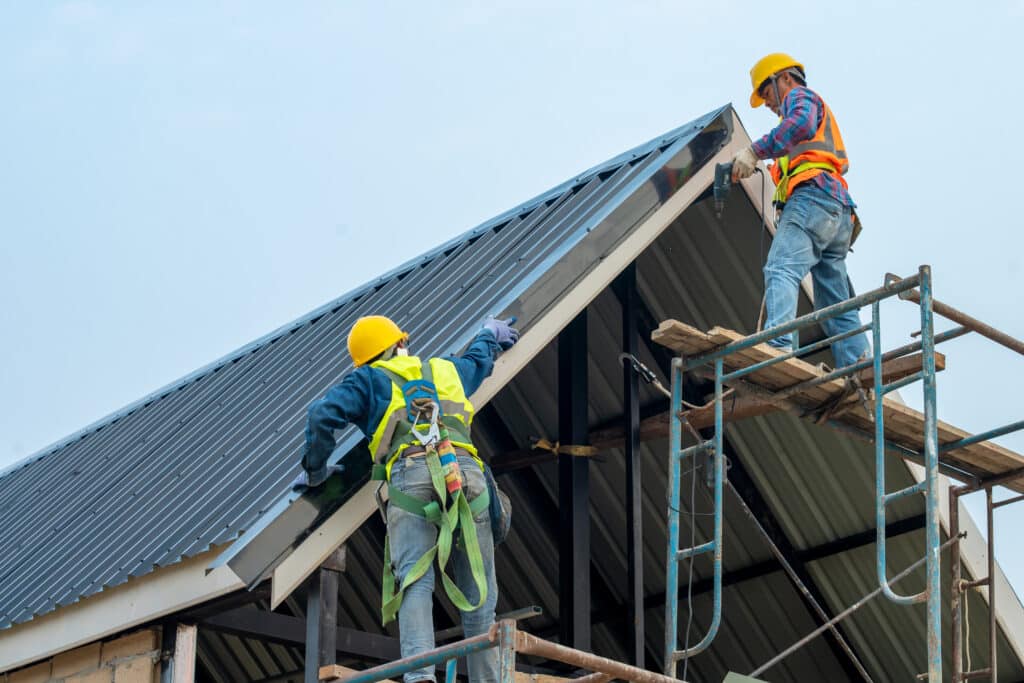
Installation typically takes 5–7 days compared to 1–2 days for a standard shingle roof. The added labor, engineering, and installation expertise contribute to its higher upfront cost.
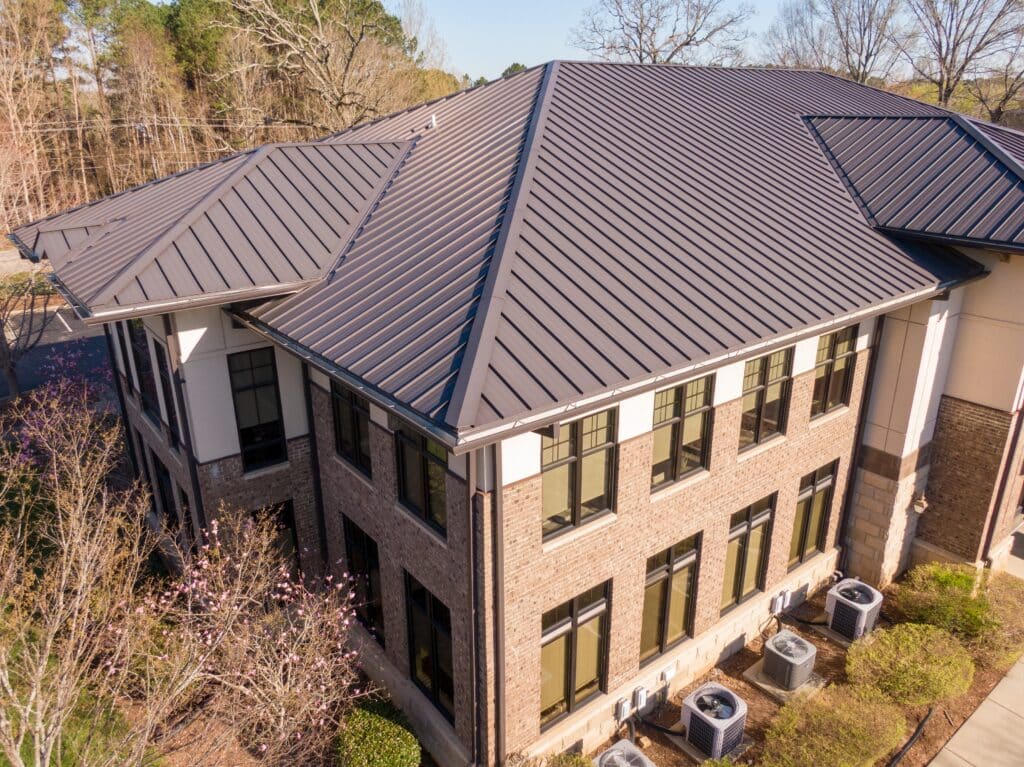
This is where metal can begin to offset its higher upfront price. Asphalt shingles typically last 20–30 years in the Missouri climate, while a metal roof typically lasts 50–100 years, depending on the system and coating.
Put those numbers on a 50-year timeline, and the comparison shifts. Over five decades in one house, you may need one metal roof compared with two or more asphalt roofs. Each replacement often costs more as material and labor prices rise.
The upfront gap that looks large on installation day narrows with each asphalt roof replacement. Standing seam sits at the top of the metal range, while exposed fastener panels are toward the lower end. Both can outlast asphalt by decades.
Your payback period is the point at which metal’s longer life offsets its higher upfront price. To estimate it, compare the difference between the two installed quotes with what you would otherwise spend replacing asphalt during the years you expect to own the home.
If you plan to stay 25 years or more, metal may offer stronger long-term value. If you expect to move within five years, the math may favor asphalt. Resale value could narrow that gap in some storm-prone markets, but it is not guaranteed.
Metal is not automatically the right answer; it often makes more sense when your ownership timeline is long enough to benefit from its extended lifespan.
In Missouri, hail is an important factor in comparisons and often the deciding factor. Hail affects the two roofing materials differently, so understanding the difference matters when choosing a roof for a hail-prone region.
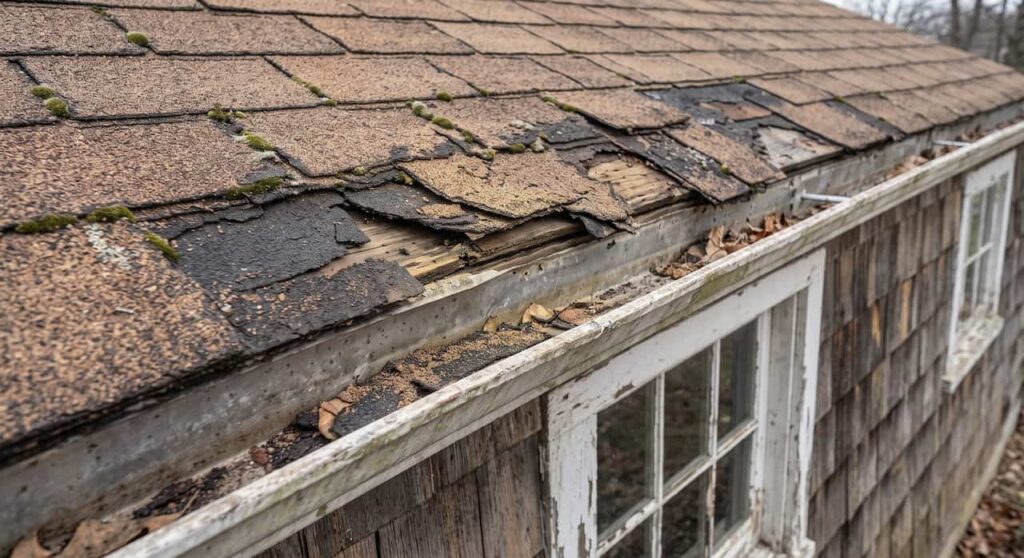
Hail can strip protective granules from asphalt shingles. Those granules shield the asphalt from the sun, so once they are knocked loose, the shingle can age faster, even if no hole appears.
Damage may be difficult to see from the ground, which is why a hail-hit asphalt roof can look fine even as its service life is reduced. After a significant storm, an inspection may help identify damage and clarify what to look for.
Hail can dent metal, and this is where expectations matter. Large hail may leave cosmetic dents, especially on thinner panels. In many cases, dents do not compromise the roof’s function or longevity. That can be an advantage over asphalt, but insurance may treat cosmetic and functional damage differently.
UL 2218 is the standard that rates roofing for impact resistance, from Class 1 up to Class 4—the highest rating. Many metal roofs earn Class 4, and impact‑resistant asphalt shingles are available as well.
In Missouri, it often helps to ask your roofing contractor or supplier about the material’s impact rating and to pair that choice with proper installation and clear storm-damage documentation. The label alone doesn’t capture performance; ratings and installation matter too. Your choice depends on priorities and budget.
Is a metal roof favored by insurance providers? The answer varies by carrier and policy, so understanding how metal roofs and insurance work together is important before you buy.
Insurance costs vary by carrier and policy. While some impact‑resistant roofing systems may qualify for discounts, the higher replacement cost of a metal roof can also affect premiums. Reviewing both premium and deductible implications with your insurer can help you understand the potential long‑term cost impact.
Certain policies include a cosmetic damage exclusion, meaning dents that don’t affect the roof’s function may not be covered. This is especially relevant for metal, where dents can be cosmetic without reducing performance. Reviewing your policy with your agent can clarify how cosmetic damage is treated.
Insurance treatment varies, so policy language matters as much as the roofing material itself here.
That is where documentation matters. A clear, photographed insurance claim record showing what a storm did and what it did not do can support the claims process.
Before choosing a roof, review your policy’s deductible, exclusions, and impact resistance requirements. If you’re considering metal after a storm, ask your insurer how cosmetic damage would be treated under your policy.
Every roof is a set of trade-offs; metal has its pros and cons, and so do asphalt shingles. So here are the downsides of each, stated plainly.
Metal’s main drawback is the upfront cost. When comparing metal roofing systems, some homeowners choose heavier 26‑ or 24‑gauge panels for added durability. Beyond that, cosmetic hail denting may not be covered if a policy includes a marring exclusion, and finding a qualified standing seam installer can require additional research.
The drawbacks are the flip side of asphalt’s lower price. Among common roofing materials, it has the shortest lifespan; granule loss from hail and age means replacement is typically needed every 15 to 25 years. That means the cost recurs on a cycle rather than being paid once.
The most common objection to metal is noise, but for houses, that concern is largely a myth. Metal installed over decking with underlayment is not appreciably louder in rain than asphalt. The drumming reputation comes from bare metal fixed over open framing, as in a barn or shed, not a home.
Asphalt often makes sense if you’re working within a tighter budget or expect to move within about ten years. Give metal serious consideration if you plan to stay long-term or are reroofing after hail damage.
For a shorter stay, architectural asphalt is the practical choice. It is proven and cost-effective, and you may not own the home long enough for metal’s longer life to offset its higher upfront cost.
Are metal roofs worth it? If you plan to keep the home, metal may deserve a closer look. Its longer life and performance can translate into lower lifetime costs. Compared with asphalt shingles, the likelihood of needing a full roof replacement over the next several decades may be significantly lower.
Reroofing after a storm can be a good time to take a closer look at metal and asphalt shingles. Your budget, ownership plans, roof condition, and storm exposure matter when comparing the two.
If you want to weigh the cost of a metal roof vs. shingles, it often helps to talk with an installer who works with both. Storm Guard installs both materials, so you can compare them directly for your home. Schedule a trusted consultation today or call (636) 778-9562. The right choice depends on your home and priorities.
Shingles are significantly cheaper to install. Metal can be more cost‑effective over the roof’s life, since one metal roof may outlast two or three asphalt ones. Which option is cheaper depends mostly on how long you plan to stay in the house.
Commonly, 50–100 years, depending on the system, coating, and installation quality, versus roughly 15 to 25 years for asphalt shingles in Missouri. Standing seam tends toward the upper end, while exposed‑fastener panels are closer to the lower end.
The higher upfront cost is the most noted drawback. After that, exposed fastener systems need maintenance, while large hail can cause cosmetic dents that may complicate an insurance claim if your policy excludes cosmetic damage.
Some insurers may offer reduced premiums for impact‑resistant roofing, though this varies by carrier and policy. Check whether your insurer offers a discount and whether your policy excludes cosmetic damage.
Not when installed over decking with underlayment, as residential metal roofing typically is. The noisy reputation comes from bare metal fixed over open framing, such as barns or sheds, not houses.
It can, particularly in regions with frequent storm damage, where buyers understand the benefit. The effect varies by market and roof life, so resale is best treated as a supporting factor rather than a financial guarantee.
Exposed‑fastener metal roofs in Missouri average around $900 per square, while standing seam metal is typically the highest upfront option at about $1,200 per square. These figures apply to reroof installations with tear‑off. Many variables, including roof complexity, material quality, and installation requirements, can influence final pricing.




Unless otherwise noted, each use of "Storm Guard," “us,” “we,” or “our” throughout Stormguardrc.com collectively refers to both the Storm Guard brand and the Storm Guard Franchise System, which is made up almost exclusively of independently owned and operated franchise locations.