Most window replacement projects run about $7,000 to $20,000 for a whole house, or roughly $300 to $2,500 per window, depending on the frame material, glass package, window style and size, and the condition of the openings behind the old units. In its 2026 survey of 1,000 homeowners, This Old House found homeowners paid about $517 per installed window and $7,183 per project on average, with frame material running from roughly $453 for aluminum to $564 for fiberglass. NerdWallet puts a full-house replacement near $18,000 to $20,000 for about 25 windows.
The cost of window replacement generally depends on five factors: frame material, glass, window style, the number and size of openings, and the condition of the framing behind the old units. As such, two homes with the same number of windows can receive different quotes.
Let’s dig deeper into what drives this price and how to compare your quotes. Then, when you’re ready for a number specific to your home, our window replacement services page explains how your local Storm Guard Roofing team measures and quotes the job.
The following are some cost considerations when replacing your windows. Keep in mind that the most accurate way to determine your cost and budget is with a free inspection and a written estimate based on your measured openings.
The price of a single window increases with:
A standard double-hung vinyl unit in a common size sits at the lower end of any quote. Meanwhile, an oversized, custom-shaped, or triple-pane unit usually sits at the higher end. Ask your prospective contractors to separate unit prices from labor costs so that you can compare quotes line by line.
Window replacement costs for an entire house typically start with the number of openings and then vary with your chosen mix of sizes, styles, and glass.
A home with mostly standard double-hung windows prices very differently from one with the same count but several bay, picture, or custom-shaped units. Larger projects often earn a lower per-unit price because crews set up, haul debris, and mobilize once.
The installation method, particularly the choice between insert and full-frame replacement, is one of the biggest factors that drive the price of a replacement project.
After significant storm damage, a full-frame replacement project is often the safer call because it exposes damage that an insert would otherwise cover up.
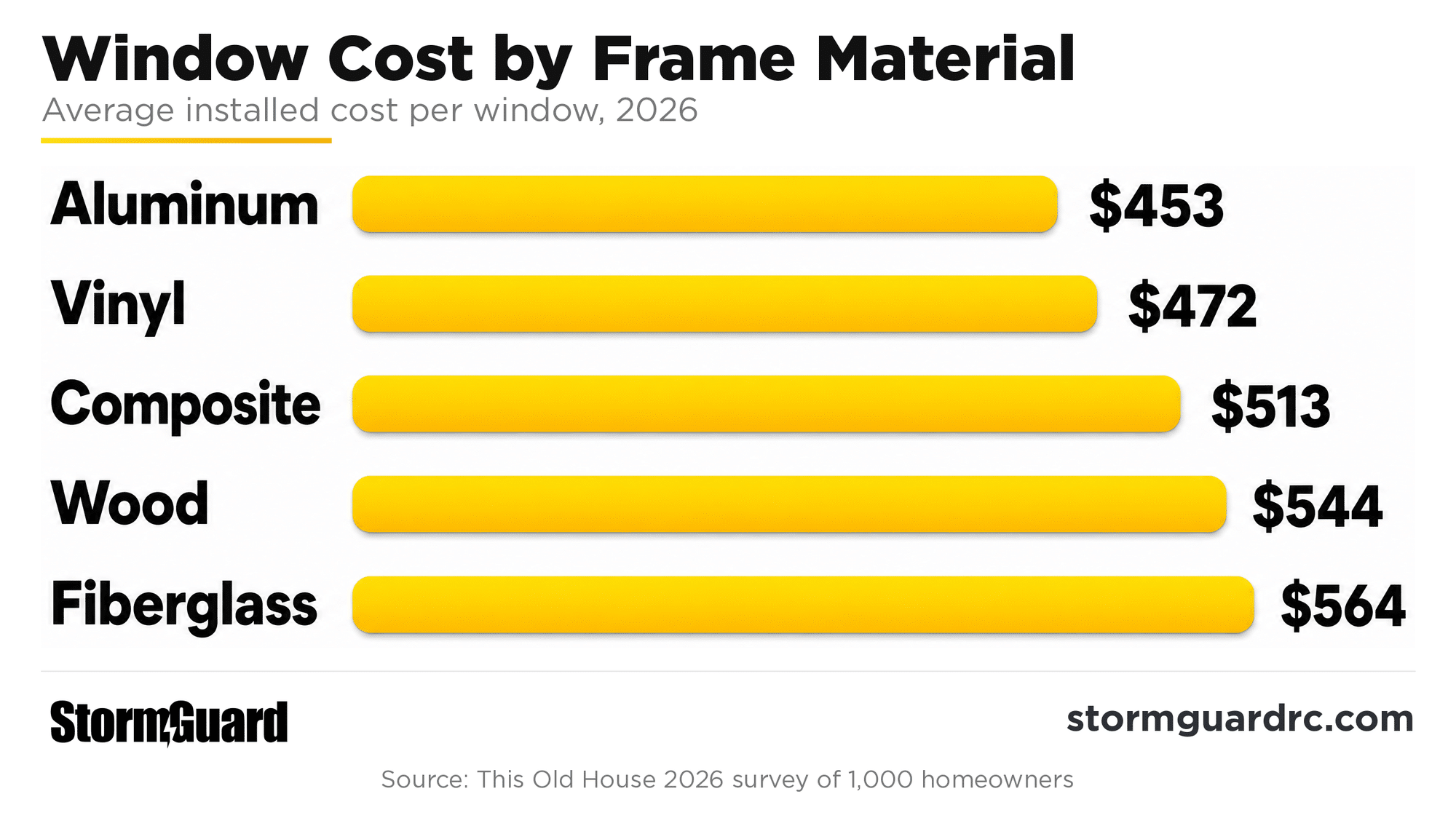
Material choice affects both the upfront price and how long the window performs, so weigh durability alongside cost. Likewise, size, style, and glass also affect material costs. You can compare window frame materials in more detail on our window types page.
| Frame Material | Impact on Cost | Qualities |
|---|---|---|
| Vinyl | Low | Best overall value, low maintenance |
| Fiberglass | High | Long service life, durable, and stable |
| Composite | Medium | Looks like wood, but with less upkeep needs |
| Wood | Medium to high | Best fit for traditional and historic homes |
| Aluminum | Low | Ideal for budget projects in mild climates |
Vinyl frames are molded from PVC. They resist moisture, don’t need paint, and insulate well, which is why vinyl is the go-to pick for most homes. The trade-offs include fewer color options and frames that can warp in extreme heat.
In the 2025 Cost vs. Value report by the Journal of Light Construction, vinyl window replacement recouped 75.5% of its resale cost, higher than wood (70.1%).
Fiberglass is stronger than vinyl, expands and contracts very little with temperature fluctuations, and maintains its seal well. Such stability makes it a long-life pick for homes regularly facing hard winters, hot summers, or frequent storms.
Meanwhile, composite frames blend materials such as wood fiber and polymer to deliver the appearance of wood while requiring less maintenance.
Wood frames suit traditional and historic architecture and provide natural insulation, but they require regular painting or staining to prevent rot.
Aluminum is among the least expensive frames and is very low-maintenance. However, it conducts heat and cold easily, so it isn’t ideal in cold climates. Thin aluminum frames also often get dented by hail.
Style and glass can also affect your project price, often more than your frame material.
Below are some of the most common window styles.
| Window style | Impact on Cost | Why Homeowners Choose It |
|---|---|---|
| Single-hung | Low | Simple, budget-friendly |
| Double-hung | Low to medium | Both sashes open, easy to clean |
| Sliding | Low to medium | Wide openings, simple operation |
| Casement | Medium | Tight seal, strong ventilation |
| Picture | Low to medium, rises with size | Fixed glass, maximum light |
| Awning | Medium | Opens in light rain |
| Bay | High | Adds space and curb appeal |
| Bow | High | Curved projection, more glass |
Oversized or custom units, upgraded glass, and upper-floor units further increase your project’s cost.
Triple-pane glass costs noticeably more per window than double-pane options. While double-pane is the standard for most climates and a major upgrade over single-pane, triple-pane adds a third layer of glass and a second insulating gap. It’s a good investment in homes in cold climates or near heavy traffic noise.
However, triple-pane windows also add weight to the entire window assembly, which can increase labor costs for large or upper-floor units.
Low-E (low-emissivity) coatings are microscopic metal layers on glass that reflect heat toward their source: indoors in winter, outdoors in summer. Likewise, an argon gas fill replaces the regular air between the panes. Because argon conducts heat more slowly than air, the window insulates better.
The number that ties them together is the U-factor, which measures how quickly heat passes through the entire window. A lower U-factor is better for energy efficiency. We recommend comparing U-factors on the label of every quote and looking for the ENERGY STAR mark rated for your climate zone.
Beyond window materials, styles, and glass, there are other costs to consider when budgeting for your replacement project.
Labor costs typically increase with:
Permits add cost in many jurisdictions, and egress rules for bedroom windows can affect the size and style you are allowed to install. A professional quote should list permits and disposal so they don’t come as a surprise later.
Years of small leaks soften sills and rot framing, while hail or wind-driven rain can break seals and push water into the wall without any visible indications. Repairing your existing frames and trim before your units go in adds to the project cost, but it ensures your new windows last longer.
If a recent storm hit your area, it’s best to have the windows, siding, and roof checked together. Our storm and hail damage guide explains what an inspector looks for across the whole exterior.
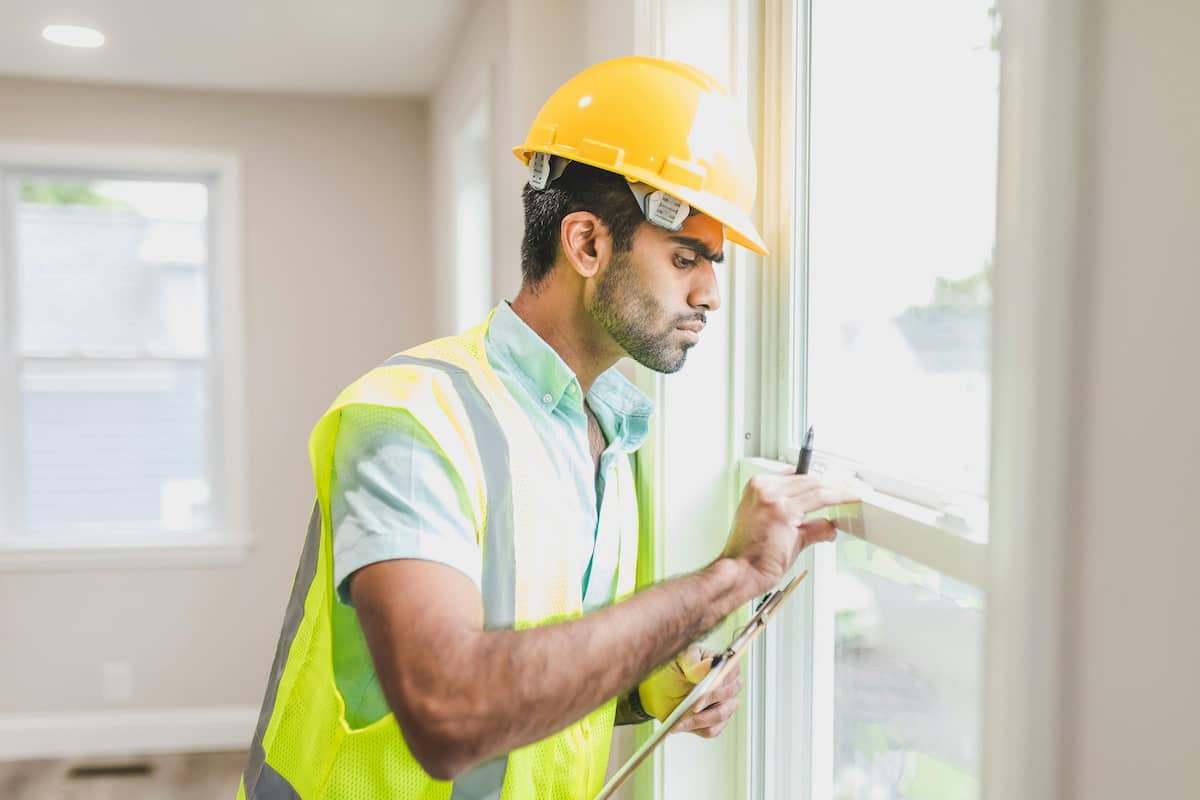
An accurate number comes from someone who has measured your openings and looked at the framing. During a free inspection, your local Storm Guard team will:
New windows are usually worth it when your current units are single-pane, failing, or damaged, because windows account for a large share of home energy loss. In fact, heat gain and loss through windows account forroughly 30% of residential heating and cooling energy use.
Replacing single-pane windows with ENERGY STAR-certified windows can significantly lower your energy bills. That said, your actual savings depend on your climate, the condition of your old windows, and your choice of glass. Savings build gradually over the years, so treat them as a long-term investment.
Repair makes sense for a single cracked pane or worn weatherstripping, and our guide on window repair vs. replacement covers that call in detail. These signs indicate that it’s time for a replacement:
Window replacement returns part of its cost at the time of sale. As mentioned earlier, combined with energy savings and comfort, this reduces the project’s real cost.
Regarding tax credits, state and federal agencies regularly offer incentives for qualifying energy-efficient improvements, including windows. Check with a tax professional about current programs to avoid missing out.
For the majority of homeowners, professional installation is the better option. Our full comparison of DIY vs. professional window replacement walks through the tradeoffs. DIY saves on labor, but mistakes lead to problems that generally cost more than labor would, such as:
Now, if you’re looking for a contractor, it’s important to ask these questions to gauge their quality, experience, and expertise.
In terms of warranties, there are two: the manufacturer’s warranty on the materials and the contractor’s workmanship warranty on the installation.
If storms damaged your windows, a qualified contractor can document the damage. For example, Storm Guard inspects the windows and the surrounding exterior and provides a written inspection report with photos you can share with your insurer.
Windows are a worthwhile investment. While replacing them can be costly upfront, you’ll recoup the cost through energy savings, improved property value, and the assurance that your home or business has better protection from the elements.
Storm Guard can help you better understand the cost of window replacement and the factors that go into it so that you can make better, more informed decisions for your property. Schedule a trusted consultation today!
The cost depends on the frame material, glass, style, size, and whether the opening needs repair. A standard double-hung vinyl unit sits at the low end, while bay windows, triple-pane glass, and framing repairs push the price higher. An assessment can give you a more concrete price estimate.
The cost of replacing all windows in a house depends on the number of openings, your chosen sizes, styles, frames, and glass, and the necessary repairs to the old frames. That said, a large project is often cheaper than replacing windows little by little.
Often, yes. Crews share setup, tear-off, and disposal across both jobs, and the flashing between siding and window openings is installed once rather than twice. Bundling also cuts the number of separate projects you pay to mobilize.
Yes, in most homes with old or failing windows. New windows often use double- or triple-pane systems that provide better insulation from outside temperatures. Some even use argon gas instead of regular air between the panes, which further increases energy efficiency.
It’s best to replace windows when you see fog between panes, drafts that persist after repeated resealing, rot or storm damage in the frame, or sashes that won’t seal. These problems can be difficult and costly, if not impossible, to fix.
It depends on your policy and the cause of the damage. Sudden damage from events such as hail or wind may be covered, while age-related wear and energy upgrades generally are not. Ask your contractor for a written damage report with photos you can share with your insurer to confirm.




Unless otherwise noted, each use of "Storm Guard," “us,” “we,” or “our” throughout Stormguardrc.com collectively refers to both the Storm Guard brand and the Storm Guard Franchise System, which is made up almost exclusively of independently owned and operated franchise locations.