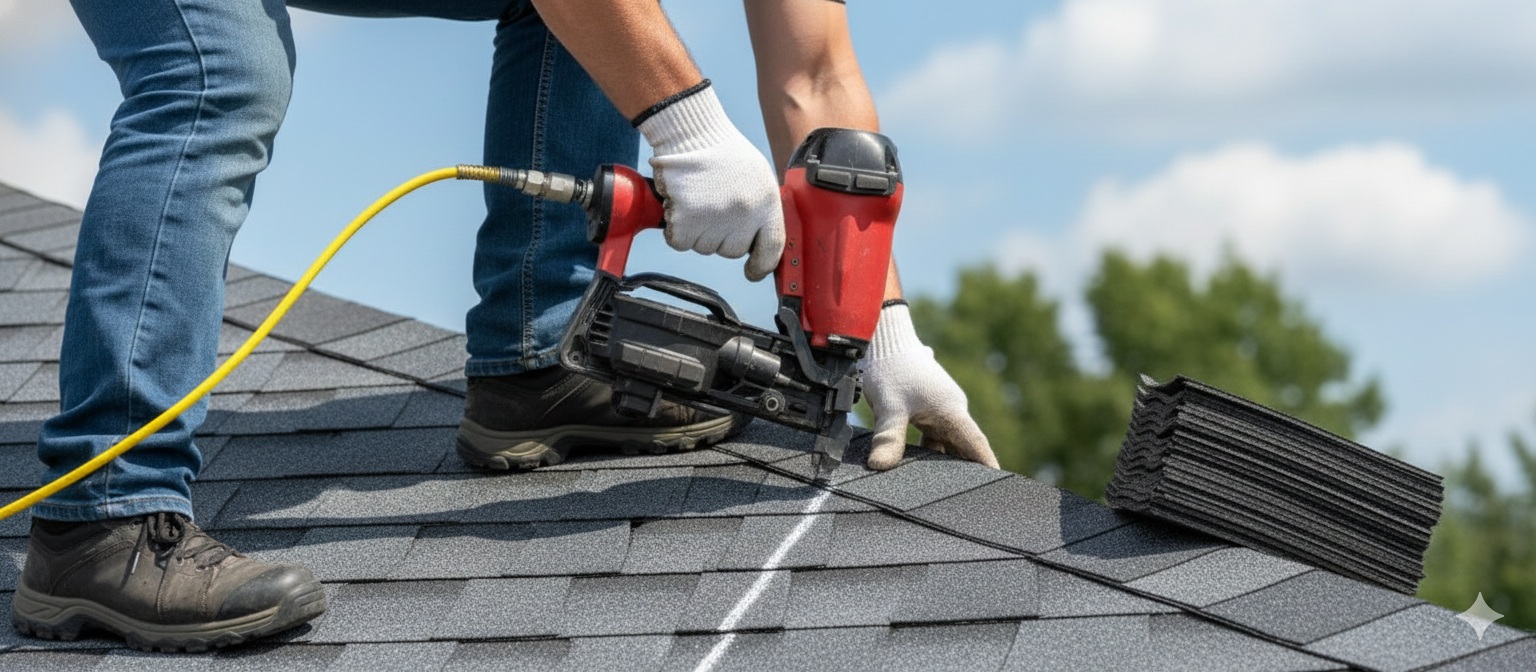
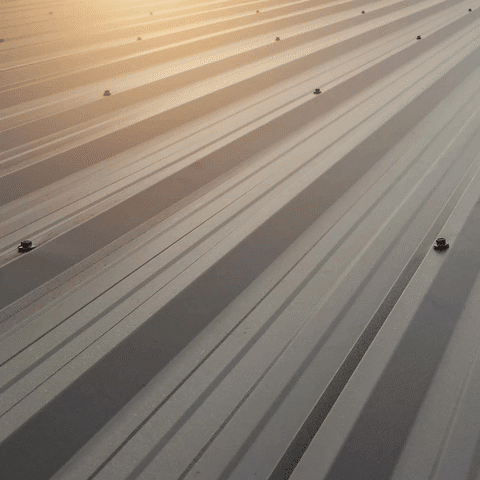
A standing-seam metal roof uses raised interlocking seams and concealed fasteners to create a weather-tight barrier that lasts 40 to 70 years. According to HomeGuide, installed costs typically range from $9 to $16 per square foot for steel systems, with total project costs between $13,500 and $40,000 depending on roof size and material. It costs more upfront than asphalt shingles, but it often costs less over the life of the roof.
Storm Guard’s national network of roofing professionals installs and services standing seam systems across the country. With more than 20 years of experience in roofing and storm restoration, our team helps homeowners make informed roofing decisions rather than pressured ones.
This guide covers what a standing seam roof is, what it costs, and whether it fits your home. When you’re ready to talk specifics, find your local Storm Guard for a personalized assessment.
A standing seam metal roof is a metal roofing system made of long panels that run vertically from ridge to eave and are joined by raised seams that interlock, concealing every fastener beneath the surface. That concealed-fastener design is what separates standing-seam from exposed-fastener (screw-down) metal panels, and it’s a major reason standing seam performs so well against wind-driven rain.
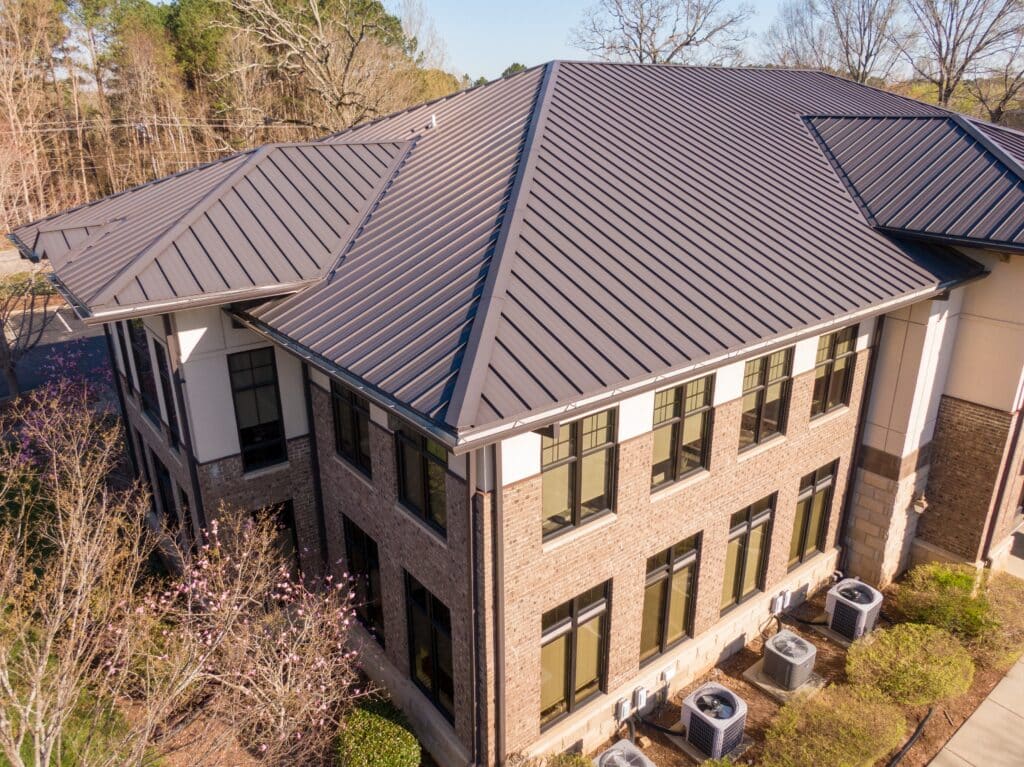
Standing seam comes in two main installation types. Snap-lock panels click together on site, speeding up installation and working well on roofs with a pitch of 3/12 or steeper. Mechanical lock panels are crimped into place with a specialized tool, and this system is required for low-slope applications down to 1/12 or even 0.5/12 pitch, typically with additional sealant at the seams. Your roof’s pitch determines which system applies.
Standing seam metal roof details depend on the materials used. Galvalume is steel coated with an aluminum-zinc alloy for corrosion resistance, and it’s the most common and cost-effective standing-seam material, typically installed at 24-gauge for residential projects. Aluminum is lighter and more corrosion-resistant, which makes it a common choice in coastal areas. Copper and zinc sit at the premium end and are usually reserved for architectural applications. Most systems use a Kynar 500 or PVDF finish coating, which resists fading and corrosion for 30 or more years.
Standing seam has real advantages for homeowners planning to stay in their home long-term, along with trade-offs worth weighing honestly before committing.
Longevity is the biggest draw. A properly installed standing seam roof lasts 40 to 70 years, compared with 15 to 25 years for asphalt shingles, and Galvalume systems can reach 60 or more years, according to the Metal Construction Association.
Storm and wind resistance follow close behind. Concealed fasteners leave no exposed penetration points for wind-driven rain, and standing seam systems are engineered to meet high wind-uplift standards. This also helps after a storm: panels are either visibly damaged or they aren’t, so documenting hail or wind damage for an insurance claim is often more straightforward than assessing granule loss on shingles.
Standing seam also runs efficiently and needs little upkeep. Reflective surfaces and cool-metal coatings that meet ENERGY STAR requirements can reduce cooling costs, with no fasteners to reseat, no granules to shed, and little risk of moss or algae. The material is fully recyclable at the end of its service life. According to McElroy Metal, conventional roofing sends an estimated 20 billion pounds of waste to U.S. landfills every year, a figure standing seam helps homeowners avoid.
For many homeowners on a budget, the upfront cost is the immediate trade-off. Standing seam metal roof panels typically run two to three times as much as asphalt shingles per square foot installed. It also requires specialized installation, since fewer contractors have the training and equipment to do it correctly, and improper installation can cause oil canning (a wavy, rippled look in a panel’s flat area), buckling, or a voided warranty.
Large hail can leave cosmetic denting, and according to Sheffield Metals, some insurers require a waiver acknowledging that dent susceptibility before covering a standing-seam roof. Field repairs are also more involved than replacing a shingle section, particularly on mechanical-lock systems. Panels expand and contract with temperature swings, which can create noise if the clip system isn’t installed correctly.
If your roof has sustained storm damage, a free roof damage assessment from Storm Guard is a useful first step before deciding between repair, a like-for-like replacement, or an upgrade to standing seam.
According to HomeGuide, the price of a standing-seam metal roof can go from $9 to $16 per square foot installed for steel systems, with total project costs ranging from $13,500 to $40,000. The exact price depends on the material you choose, your roof’s size and pitch, and the condition of your existing deck.
| Material | Installed Cost per Square Foot |
|---|---|
| Galvalume steel | $7.50 to $12.50 |
| Steel | $8 to $13 |
| Aluminum | $9.50 to $17 |
| Zinc | $10 to $20 |
| Copper | $18 to $32 |
Source: HomeGuide
Asphalt shingles cost less upfront, running $4.50 to $8 per square foot installed, but they last only 15 to 25 years. Standing seam costs more at $9 to $16 per square foot, but lasts 40 to 70 years.
Additional factors of the cost depend on the selected roofing system and the installation method. Each project is unique, and a professional assessment is the best way to determine the right approach and overall investment. Schedule a free consultation with your local Storm Guard to get numbers specific to your home.
Standing seam installation follows a more exacting process than asphalt shingle installation, and knowing the steps helps you evaluate whether a contractor is doing it right.
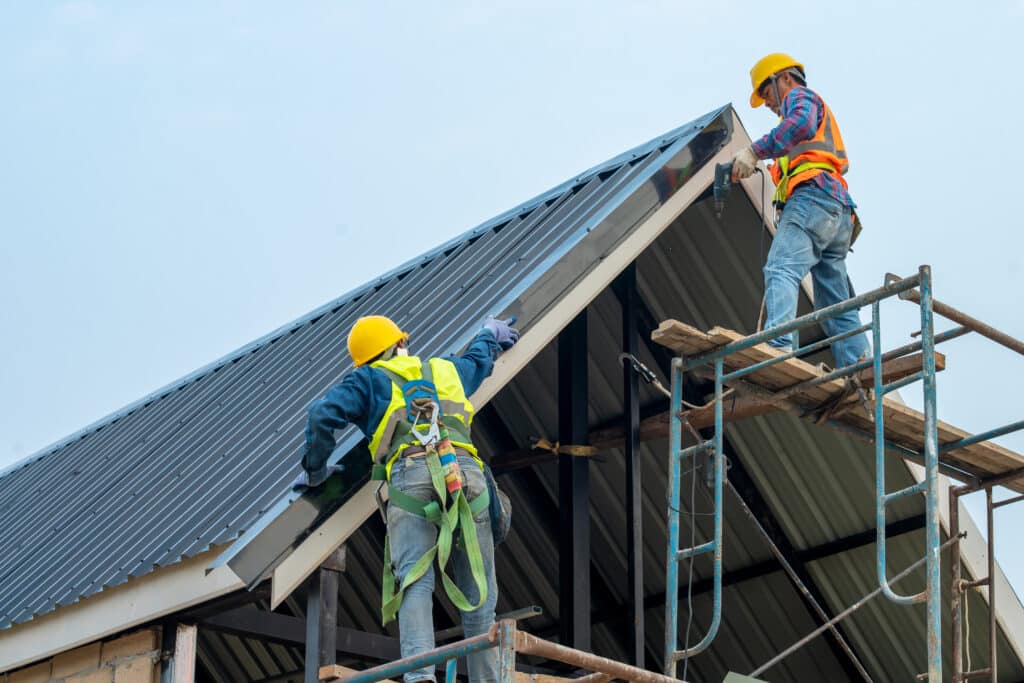
Standing seam tolerances are tighter than shingle installation. Incorrect clip spacing can cause oil canning, and improperly seamed panels can void the weathertight warranty. Storm Guard follows an assess, advise, restore, confirm process on every project and backs its work with a workmanship warranty alongside the manufacturer’s material warranty.
Explore residential roofing services to see the full range of options Storm Guard installs.
Standing seam comes in more than 30 standard colors depending on the manufacturer, from traditional charcoal and dark bronze to bolder reds and greens. Kynar 500 and PVDF coatings keep that color accurate and resistant to fading for 30 or more years.
Color affects more than curb appeal. Lighter colors, such as white, light gray, and tan, reflect more solar radiation and can qualify for ENERGY STAR cool-roof ratings, while darker colors absorb more heat but remain popular for their look. Explore metal roofing styles and options to see finishes side by side.
Panels typically come in widths of 12, 16, or 18 inches, with seam heights of 1, 1.5, 1.75, or 2 inches. Taller seams shed water more effectively, and minor striations are sometimes added to the flat pan area to reduce the appearance of oil canning. Gauge selection matters too: 24-gauge Galvalume is the standard for most residential projects, while 22-gauge is available for homes in higher-wind or impact zones, and aluminum panels typically come in .032 or .040-inch thicknesses. Homeowners can also coordinate siding, gutter, and trim colors with their roof, and Storm Guard can walk through the available combinations during a consultation.
A standing seam metal roof tends to make the most sense for homeowners who plan to stay 15 years or longer, live in a storm-prone or hot climate, or are replacing a storm-damaged roof and want a longer-lasting upgrade. The higher upfront cost is usually offset by decades of avoided replacements and lower maintenance.
Some insurers offer premium discounts for impact-resistant roofing, and a storm-damaged roof’s insurance settlement may cover part of the replacement, depending on your policy. Storm Guard documents the damage found during inspection; your carrier determines coverage under your policy’s terms.
Standing seam isn’t the right fit for everyone. Homeowners planning to move soon, working with a tight budget, or dealing with a flat roof below the minimum pitch for snap-lock may find other options make more sense.
The right roofing material depends on your home, your climate, and your long-term plans. Storm Guard’s local teams help you weigh the options with clarity and confidence. Schedule a free consultation to find out which approach fits yours.
A properly installed standing seam metal roof lasts 40 to 70 years, depending on the material and maintenance. Steel and Galvalume systems typically last 50 or more years, and copper and zinc can last even longer. Asphalt shingles last 15 to 25 years by comparison.
According to HomeGuide, installed costs for steel standing-seam roofing range from $9 to $16 per square foot. Aluminum ranges from $9.50 to $17 per square foot, and premium materials like copper can cost up to $32 per square foot. Total project cost depends on roof size, pitch, and material selection.
Yes, but carefully. The panels can dent or scratch under concentrated weight or the wrong footwear, so soft-soled shoes are recommended for traction and to protect the finish. For inspections or repairs, having a professional roofer walk the roof is the safer option and helps avoid accidental damage to panels or coatings.
Standing seam metal roofs generally hold up well against hail because there are no granules to lose and no fastener penetrations for water to exploit. Large hail can cause cosmetic denting, but the waterproof integrity of the concealed seam system typically remains intact.
Metal roofing’s durability and low maintenance can make a home more appealing to buyers, particularly in storm-prone regions. Exact return on investment varies by market, so a local real estate professional can speak to numbers specific to your area.




Unless otherwise noted, each use of "Storm Guard," “us,” “we,” or “our” throughout Stormguardrc.com collectively refers to both the Storm Guard brand and the Storm Guard Franchise System, which is made up almost exclusively of independently owned and operated franchise locations.