
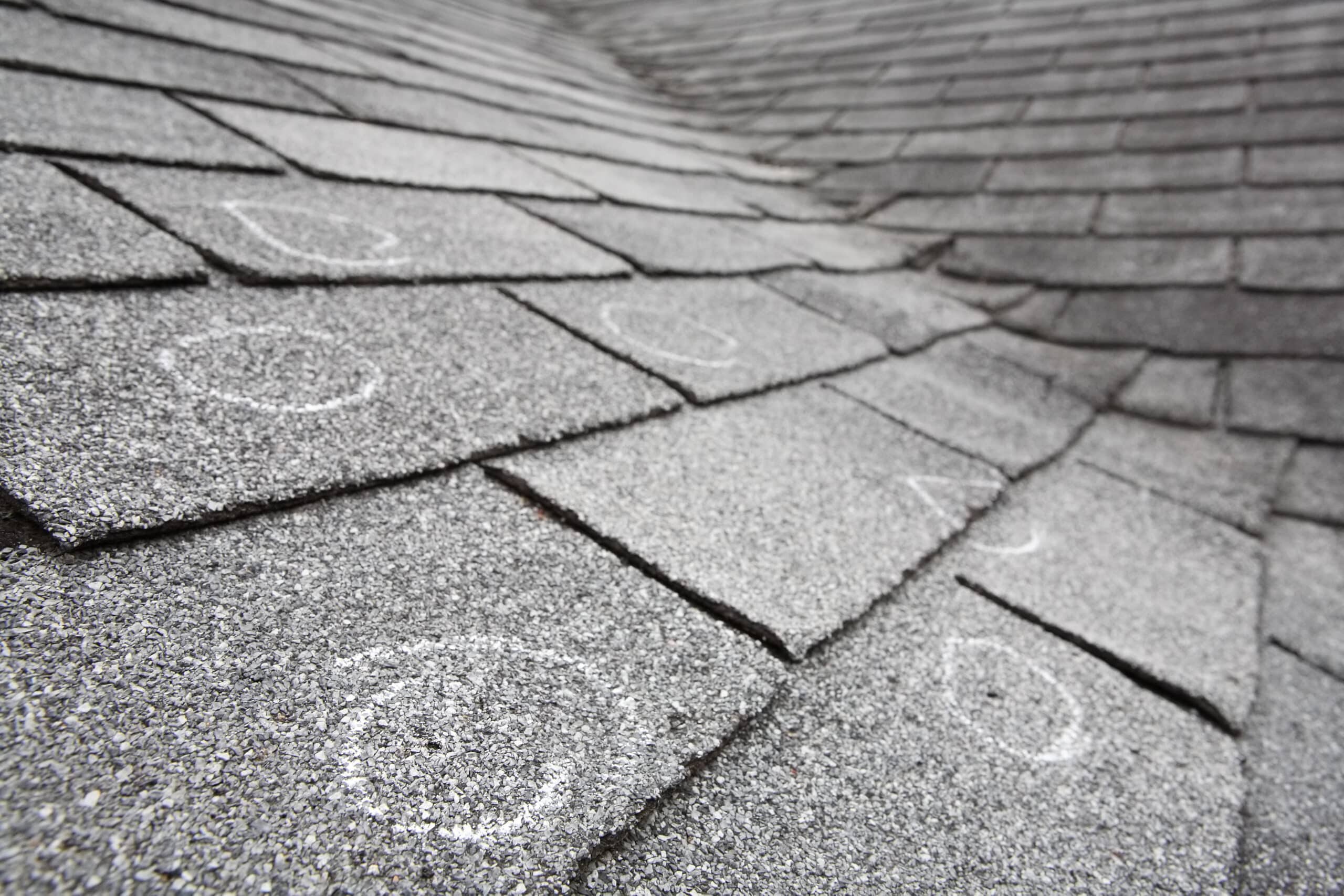
Most advice about a hail damage roof insurance claim Missouri homeowners file gets one important detail wrong: there are two separate deadlines, not one.
Confusing these deadlines can lead to conflicting advice or missed deadlines. This guide summarizes Missouri statutes and Department of Commerce and Insurance guidance on hail damage claims, as well as how a storm-damage roof repair assessment fits into the process.
We’ll also cover what to do after hail damage and what homeowners should know if a claim is denied.
Start here because this is where much of the confusion comes from. Understanding the difference helps homeowners avoid conflicting advice and missed opportunities.

The first clock is contractual. Your homeowners’ policy requires you to notify your insurer after a loss. Understanding this requirement is an important first step for homeowners preparing documentation to file a roof insurance claim in Missouri.
Policies may use language such as “prompt notice” or “notice as soon as practicable” rather than giving a specific number of days. This is a term of your policy, not a Missouri statute, and it can vary by insurer. You can usually find it under a section such as “Duties After Loss.”
What to do: Check your policy before reporting a claim so you understand the notice requirement that applies to your coverage.
The second clock comes from Missouri law. State statutes establish limitation periods for bringing certain lawsuits against an insurer. This is separate from the notice requirement in your insurance policy.
That distinction matters because online advice can blur the two. A statutory limitation period may be presented as a claim-filing deadline, while a policy’s notice requirement may be presented as a legal deadline.
For homeowners’ insurance disputes, RSMo 516.110 and RSMo 516.120 may be relevant. The applicable limitation period is a legal question that may require advice from a Missouri attorney.
The Missouri Department of Commerce and Insurance advises homeowners to report a claim as soon as possible. For your specific deadline and legal rights, review your policy and consult qualified legal counsel.
Other deadlines can matter after an insurer responds to your claim. These timelines can affect how you challenge a payment decision or denial.
These deadlines can run while you are disputing how much the insurer owes, rather than whether you can file a claim at all. A documented roof inspection provides dated photos and measurements to help you clearly document the damage for your insurer’s review.
Missouri does not leave claim response times entirely to the insurer. State regulations establish response requirements, and understanding them can help you recognize when a claim may be taking longer than expected.

Under 20 CSR 100-1.050, an insurer generally must accept or deny a claim within 15 working days after receiving all forms and information reasonably necessary to make the decision.
The response period depends on the insurer having the information needed to evaluate the claim. Homeowners often ask for clarification when this period has passed without a decision being reached.
If an insurer cannot decide within the initial response period because the claim is still under investigation, Missouri regulations require a written explanation for the delay. While the investigation continues, the insurer must provide a written update at least every 45 days.
If your insurer fails to meet applicable response requirements or your claim remains stalled, homeowners may file a complaint with the Missouri Department of Commerce and Insurance (DCI).
Missouri’s Unfair Claims Settlement Practices Act governs certain insurer conduct, but under RSMo 375.1000, the statute does not create a private right of action.
Documentation matters. Keeping your roof assessment complete and responding promptly to reasonable requests can help keep the claim moving.
If you’re asking, “Does insurance cover hail damage to a roof in Missouri?”, the answer depends on your policy and whether the hail damage is a covered loss.
Two neighbors can have the same roof, the same storm, and the same insurer but receive very different insurance payments. Understanding the difference between actual cash value (ACV) and replacement cost value (RCV) coverage can help you see why the difference matters.
The Missouri Department of Commerce and Insurance provides an example that illustrates the difference:
| RCV Policy | ACV Policy | |
| Roof replacement cost | $15,000 | $15,000 |
| Deductible | $1,000 | $1,000 |
| Depreciation | $0 | $10,000 |
| Initial insurance payment | $14,000 | $4,000 |
The difference is $10,000, even though the roofs, storm damage, and deductibles are identical. Under an RCV policy, depreciation may be withheld initially and released after repairs are completed and documented, subject to policy terms.
You can find your coverage type on the declarations page. Look for:
These terms may appear in the coverage description for your roof or dwelling. If you’re unsure, ask your insurance agent to confirm. That distinction can significantly affect what you receive after a covered loss.

The Missouri Department of Commerce and Insurance explains that insurers may authorize repair or replacement of only the portion damaged by a covered event. Missouri does not have a general matching law for homeowners’ insurance.
A discontinued shingle color does not automatically require the insurer to replace the entire roof. Homeowners often document the existing roof carefully and ask their insurer how partial repairs will be handled when matching materials are unavailable.
One more line to check is Ordinance and Law coverage. A standard policy does not necessarily cover the additional cost of bringing an older roof up to the current building codes.
If your home is older and code upgrades may be required once work begins, the added cost can be high.
Check before you need it: Look for Ordinance and Law coverage on your declarations page before a roof claim, not after work begins.
After a storm, roofing companies may begin contacting homeowners within days. Before accepting an offer, it helps to understand what Missouri law allows a contractor to do with an insurance claim.
Missouri law places limits on how contractors can handle insurance deductibles. Under RSMo 407.725, a contractor cannot pay, waive, rebate, or absorb your insurance deductible.
That means offers such as “free roof” or “we’ll cover your deductible” can signal a legal problem. With a legitimate insurance‑funded replacement, you remain responsible for your policy’s deductible.
Missouri law restricts what contractors can do with insurance claims. Contractors can document physical damage and provide inspection findings, while the insurer determines coverage under the policy.
| A Contractor Can | A Contractor Cannot |
| Document storm damage | Negotiate your claim with your insurer |
| Provide written findings | Act as your insurance claim advocate |
| Provide dated photographs | Promise to handle the insurer on your behalf |
Documentation is evidence, not negotiation. Your insurer makes the coverage decision, while your contractor can help ensure the physical damage is clearly documented.
Missouri law provides a five‑business‑day cancellation period for certain storm‑related roofing contracts. If a contractor pressures you to sign immediately, remember you have time to read the agreement and understand your cancellation rights. Be cautious of urgency designed to keep you from reviewing or comparing the contract.
One detail surprises many homeowners: Missouri does not have a statewide roofing license requirement.
So when a contractor calls itself “licensed,” that alone does not tell you much. Instead, ask for evidence of:
Considering an out-of-state crew? Ask for proof of filing the required financial assurance under RSMo 285.230 and certification of workers’ compensation coverage.
With the law and coverage clear, here is a practical sequence to follow after a hailstorm. The goal is to protect both your property and your insurance claim.
Photograph the damage first. Before repairs or cleanup begin, document:
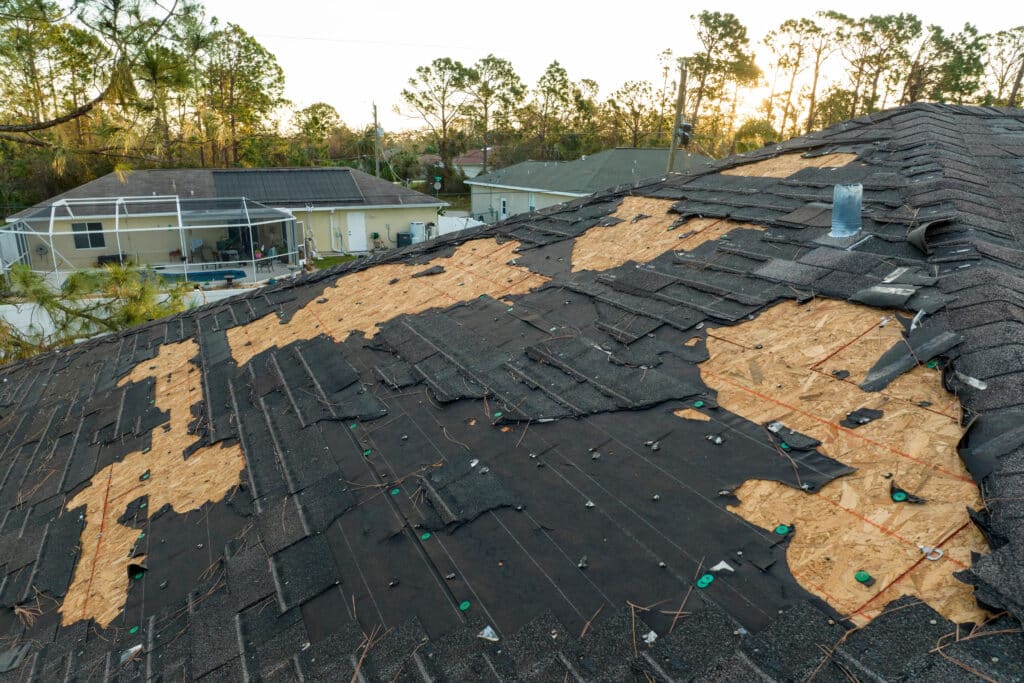
These photos preserve evidence of the property’s condition after the storm, which may be lost once cleanup or repairs begin. Safety first: Do not climb onto the roof to photograph damage. Use ground‑level photos or have a professional inspect areas that cannot be safely reached.
If water is entering your home, have the roof tarped promptly. Your insurance policy generally requires you to take reasonable steps to prevent additional damage. If safe to do so, photograph the damage before emergency mitigation begins. Keep receipts and records for any temporary repairs or services.
Emergency mitigation, such as tarping, may be covered by your policy. However, coverage varies, so keep your documentation and check your policy before assuming a cost will be reimbursed.
Get a documented roof inspection with measured test squares across the roof to identify and document representative hail impacts rather than relying on a visual estimate from the curb.
A thorough inspection should document:
This documentation provides clear evidence of the damage in your insurance file and can support the claims process if additional damage is identified later.
Once you have documented the damage, open the claim with your insurer. The Missouri hail damage claim deadline depends on the notice requirements in your insurance policy, so review your policy and report the loss within the required timeframe.
When the adjuster schedules an inspection:
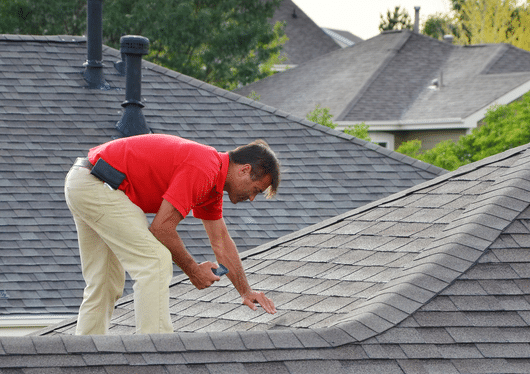
There are two things to keep in mind when the adjuster arrives.
1. Stick to what you know.
Do not guess how old the damage is or speculate about which storm caused it. Describe what you observed and let your inspection photos and documentation provide the evidence. A wrong guess can create unnecessary questions about an otherwise valid claim.
2. A hail claim can affect your premium.
Weather‑related claims may be treated differently from liability claims, and widespread hail events can affect rates across a region. Whether your premium changes depends on your insurer, policy, and claims history. No one can guarantee it will stay the same, so be cautious of anyone who makes that promise.
Once you’ve taken these steps, you may want a professional inspection to document the damage clearly.
Storm Guard Roofing offers no‑cost, no‑obligation hail damage inspections across the region. If a recent storm has left you unsure what to do next, we can document the damage and provide a clear record of your roof’s condition.
Homeowners often face roofing insurance claims in St. Louis after hailstorms, and clear documentation helps ensure the claim reflects the actual damage:
Accurate information comes first. A clear understanding of your roof’s condition can help you make a more informed decision about what to do next. Schedule a trusted consultation today or call (636) 778-9562.
The deadline depends on your insurance policy’s notice requirements. If you have a roof insurance claim Missouri homeowners need to act on, report the damage as soon as you discover it.
Insurance may not pay for a full roof replacement when only part of the roof has covered damage. If you’re considering a roof damage insurance claim in St. Louis, remember that Missouri has no matching law, so an insurer may authorize repair or replacement only of the portion damaged by the covered event.
Missouri regulations generally require an insurer to accept or deny a claim within 15 working days of receiving the necessary forms. If an investigation continues, the insurer must provide written status updates every 45 days.
Actual cash value (ACV) accounts for depreciation, while replacement cost value (RCV) reflects the cost to replace damaged property without depreciation. The difference can be substantial on an older roof.
A contractor cannot legally pay, waive, rebate, or absorb your insurance deductible. Be cautious of offers to “cover your deductible” or provide a “free roof.”
No. A roofing contractor can document physical damage and provide inspection findings, but they cannot determine coverage or guarantee a claim outcome. Your insurer makes the coverage decision.
Your homeowners’ insurance premium may increase after a hail claim, but no specific increase can be predicted. The impact depends on your insurer, policy, claims history, and other factors.
Missouri does not require a statewide roofing license, so the word “licensed” alone does not tell you much about a roofer. Ask about general liability insurance, workers’ compensation, a permanent local business address, and manufacturer certifications.




Unless otherwise noted, each use of "Storm Guard," “us,” “we,” or “our” throughout Stormguardrc.com collectively refers to both the Storm Guard brand and the Storm Guard Franchise System, which is made up almost exclusively of independently owned and operated franchise locations.