
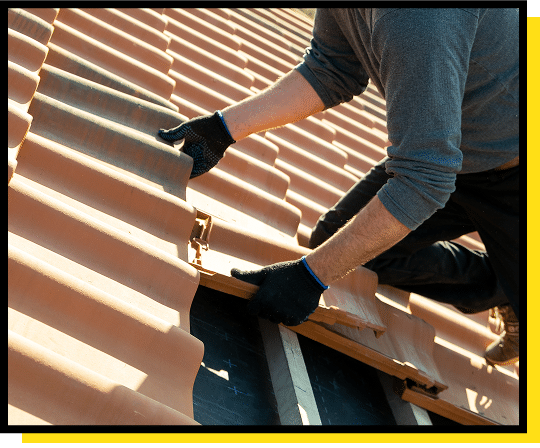
Your roof is one of the most important parts of your home, protecting your family and everything inside from the elements. That’s why regular roof maintenance is essential for keeping your home safe, comfortable, and protected year-round. From inspecting shingles and flashing to clearing debris and checking for signs of leaks, routine care can help prevent small issues from becoming costly repairs.
In this guide, Storm Guard will walk you through the basics of how to maintain your roof, what warning signs to look for, and when it’s time to call a professional. With the right care and attention, you can help extend the life of your roof and protect your biggest investment for years to come.
Roof maintenance is the routine inspection and upkeep of every component that keeps water out: shingles, flashing, valleys, gutters, soffit and fascia, sealant, and attic ventilation. It differs from repair, which fixes existing damage, and from replacement, which rebuilds the system entirely. Maintenance is what keeps repair and replacement further away.
A full maintenance check from a professional covers more than the shingles you can see from the driveway:

Between professional visits, a homeowner can do a quick check from the ground or with binoculars. Try to look for missing or curling shingles, sagging spots, debris buildup in valleys and gutters, and anything unusual in the attic, such as light coming through the deck or a musty smell.
Stay off the roof itself and skip the ladder for anything beyond gutters at ground level; a homeowner walk-around is meant to catch obvious changes, not replace the parts of an inspection that require training and the right safety equipment. Write down the date and take a photo whenever something looks off, even if it seems minor. The section on warning signs below goes into more detail on what each of these actually means.
Deferred maintenance follows a predictable path: granule loss speeds up, small leaks turn into deck rot, and a roof that could have gone another decade with upkeep instead needs a section replaced early. Most manufacturer warranties also expect documented maintenance, so skipping it can affect coverage down the line, not just the roof itself.
A roof maintained on schedule usually needs nothing beyond a minor repair here and there. A neglected roof more often needs a larger fix, and sometimes a full new roof sooner than its materials should have required. Professional roof inspection and basic upkeep cost a fraction of a water-damage repair, though the specific numbers for inspection and cleaning services should come from Storm Guard’s current pricing rather than a generic estimate.
Storm Guard’s national network applies the same inspection standard in every market we serve, so a homeowner’s roof gets looked at and documented the same way whether the inspection happens in the Midwest or the Southeast.
Ready to have your roof looked at by someone trained to catch what a ground-level glance misses? Book a professional roof inspection with your local Storm Guard team.
Inspect your roof at least twice a year, once in spring and once in fall, and again after any storm with hail, high winds, or heavy debris.
The National Roofing Contractors Association recommends inspecting a roof in spring and fall as a baseline to catch seasonal wear before it becomes a leak.
In storm-prone regions, that baseline isn’t enough on its own: a hailstorm in July or a windstorm in November doesn’t wait for the next scheduled check. Have a roof inspection after any event severe enough to notice, whether that’s a bad hailstorm, straight-line winds, or a fallen branch. A roof that only gets looked at once a year, on no particular schedule, is the one most likely to have an issue sit unnoticed for months.
Roof maintenance changes with the seasons. Spring and fall call for a full inspection, after winter’s damage or before storm season arrives. Summer heat and UV exposure stress shingles and attic ventilation. Winter brings ice dams and snow load.
Each season has its own short task list rather than one generic checklist that applies year-round, and each season also sets up the one that follows it: a summer of poor attic airflow shows up as ice damming in winter, and a winter of ice and snow shows up as loosened flashing and granule loss by spring.
| Season | Focus | What to Check |
| Spring | Winter damage, storm season prep | Inspect for damage from winter ice and wind. Clear gutters and downspouts of winter debris. Confirm flashing and sealant survived freeze-thaw cycles before storm season builds. |
| Summer | Heat, UV, humidity | Watch for shingle curling or cracking due to UV exposure and thermal expansion. Check attic temperature and airflow, since poor ventilation bakes shingles from underneath. |
| Fall | Debris, gutters, pre-winter prep | Clear leaves and debris before they compact in valleys and gutters. Confirm downspouts drain freely ahead of winter precipitation. |
| Winter | Ice dams, snow load, freeze-thaw | Watch for ice dams forming at the eaves, especially where attic ventilation is uneven. Remove heavy snow buildup from the ground. Freeze-thaw cycles widen existing cracks in flashing and sealant. |
Attic ventilation shows up in two of these seasons for a reason: it keeps summer heat from cooking shingles from below, and it keeps winter attic warmth from melting snow that leads to ice dams. If you’re not sure whether your attic is ventilated correctly, this guide to attic ventilation and your roof walks through what balanced intake and exhaust should look like.
A homeowner who follows this roof maintenance guide, works through this table twice a year, and adds a post-storm check whenever the weather calls for it is doing everything routine maintenance is meant to accomplish.
After a storm, check for missing or displaced shingles, dented gutters and vents, and granule buildup in downspouts before doing anything else. Photograph everything from the ground, stay off a damaged roof, and get a professional inspection promptly. An immediate, well-documented inspection is what turns storm damage into a claim that’s easy to support.
It’s important to learn how to recognize signs of hail damage on your roof. Hail bruising often shows up as soft, circular dents in a shingle rather than an obvious hole or crack, which is why it’s easy to miss without a close inspection. Granule loss collecting in gutters after a storm is another sign that hail may have hit the roof. Wind damage tends to show as lifted, curled, or creased shingles, sometimes concentrated at the roof’s edges and ridges where wind uplift is strongest. A shingle doesn’t have to be missing to have sustained wind damage.

Dated inspection records and photos establish what condition your roof was in before the storm, which is exactly what supports the argument that new damage came from that storm rather than ordinary wear. Without that baseline, it’s harder for anyone, including an insurance adjuster, to tell the difference between storm damage and a roof that was already aging.
Your insurance carrier and your policy determine what your claim covers and how the claims process itself is handled. But while Storm Guard cannot be your insurance negotiator, our team can provide a professional, well-documented roof inspection of your home that gives your insurance claim process a stronger starting point.
Maintenance keeps a roof sound. It can’t fix a roof that has reached the end of its expected lifespan, sustained widespread damage, or developed leaks that keep reappearing in different spots. When any of those apply, the conversation shifts from upkeep to repair or replacement, and a professional inspection is what settles which one fits.
Most asphalt shingle roofs are rated for 20 to 30 years depending on the product, and a roof approaching or past that range shifts the math toward replacement even for damage that would otherwise be a simple repair.
Repair generally makes sense when damage is isolated to one area, the roof is relatively new, and the decking underneath is sound.
Replacement makes more sense when damage is widespread across multiple slopes, leaks keep showing up in new places rather than the same spot, energy costs are climbing because the roof and its ventilation are failing, or the roof is already near the end of its expected lifespan. A roof that’s needed three separate repairs in as many years is usually telling you something a fourth repair won’t fix.
Patching an aging roof repeatedly is often a more expensive path over time than one properly timed replacement, especially once repairs start clustering in the same season or targeting the same weak spot. A failing roof and its ventilation can also drive up energy costs gradually, in a way that’s easy to miss until you compare bills year over year rather than month to month.
The straightest way to get a clear recommendation, rather than guessing at where your roof falls on that curve, is a professional inspection that lays out repair and replacement options side by side, with the reasoning for each, so the decision is yours to make with full information rather than a hunch.
Ready to know where your roof stands? Schedule an Inspection Today with your local Storm Guard team.
Inspect your roof at least twice a year, in spring and fall, and again after any major storm with hail or high winds. Twice-yearly checks catch seasonal wear before it turns into a leak, and post-storm checks catch damage while it’s still documentable for warranty or insurance purposes.
Routine maintenance means clearing debris and gutters, checking shingles for cracks, curling, or granule loss, inspecting flashing and sealant around penetrations, confirming attic ventilation, and watching for interior signs of moisture. The goal is to find and fix small issues before water gets past the surface.
You can safely clear gutters, remove ground-level debris, check your attic for moisture and light, and inspect the roof from the ground. Leave anything that requires walking on the roof, sealant repairs, or storm-damage assessment to a professional, both for safety and for an accurate diagnosis.
Cost depends on your roof’s size, pitch, and scope of work, and it’s far lower than the cost of a major leak or a premature replacement.
Yes. Most manufacturer warranties expect documented maintenance, and dated inspection records and photos make an insurance claim easier to support after storm damage. Keeping a maintenance log protects both your warranty coverage and your claim.
Consider replacement when the roof is near the end of its expected lifespan, damage covers a large area, leaks keep recurring, or an aging roof is driving up energy costs. A single isolated issue on an otherwise sound roof usually calls for a repair. A professional inspection settles it either way.




Unless otherwise noted, each use of "Storm Guard," “us,” “we,” or “our” throughout Stormguardrc.com collectively refers to both the Storm Guard brand and the Storm Guard Franchise System, which is made up almost exclusively of independently owned and operated franchise locations.