Gutter guard costs depend on the type of guard installed, the linear footage of your home’s gutters, the number of stories and roof pitch, and the condition of the gutters and fascia underneath.
However, price is only half the decision. Gutter guards attach to the edge of your roof, so how they’re installed matters as much as the product. A guard that lifts shingles or traps water can cause the damage it was meant to prevent. Storm Guard Roofing installs and inspects those roof edges every day, and our gutter guard installation service treats the roof and gutters as one system.
Gutter guard costs are set by footage, guard type, roof access, and repairs. A more accurate number comes from measuring your gutters and checking the roof edge where the guards attach.
| Factor | What Affects the Price | Impact on Cost |
|---|---|---|
| Guard type | Inserts and screens vs. micro-mesh vs. branded surface-tension systems | High |
| Linear footage | Total length of gutter measured along every eave | High |
| Stories and roof pitch | Multi-story properties and steep pitches need more setup and safety equipment | Medium |
| Corners, downspouts, short runs | Each corner and downspout adds fitting and labor time | Medium |
| Gutter condition | Sagging sections, leaking seams, and poor pitch must be fixed first | Medium to high |
| Fascia and roof edge | Rotted fascia or a missing drip edge needs repair before guards go on | Medium to high |
| Warranty and brand tier | Premium branded systems carry longer warranties and higher per-foot rates | Medium |
DIY guards can keep costs low, and plastic screens are the least expensive way to cover an entire house. However, you can’t guarantee durability, fit, and safety.
Professional installation costs more. Yet, it includes cleaning and gutter inspections to ensure a good fit, proper fastening at the roof edge to prevent sagging, and a product or workmanship warranty backing up the contractor’s work.
Installers measure every run of gutter along the eaves and quote a per-foot price that includes material and labor. Downspouts, inside and outside corners, and gutter repairs are often priced separately.
Ask for a written estimate that includes the measured footage, the per-foot rate, and any repair line items so that you can compare prospective contractors.
The right type depends on how many trees surround your home, what kind of debris they drop, and your roof’s pitch.
| Guard Type | Impact on Cost | Best For… |
|---|---|---|
| Micro-mesh | Medium | Fine debris, pine needles, shingle grit |
| Surface tension (reverse curve, helmet) | High | Heavy leaf loads |
| Steel screen | Low to medium | Large leaves, moderate tree cover |
| Plastic screen | Low | Tight budgets, light debris |
| Brush insert | Low to medium | Short-term clog control |
| Foam insert | Low | Short-term clog control |
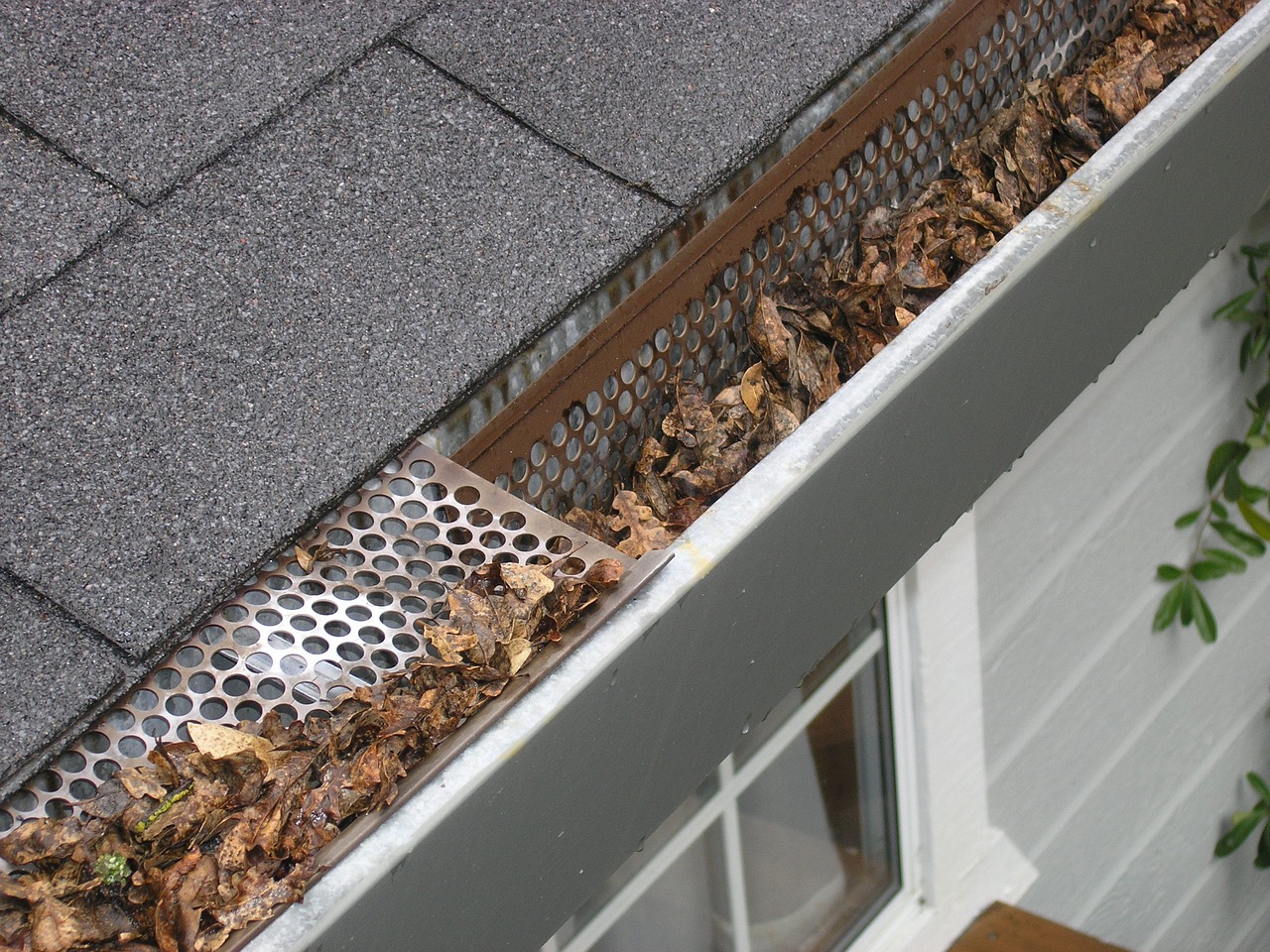
Micro-mesh guards use a fine stainless or aluminum mesh over a rigid frame. Water passes through, while leaves, seeds, and granules that wash off asphalt shingles are kept out. They are the gold standard for blocking tiny debris, though the mesh surface still needs occasional brushing off where debris settles.
This cover relies on water clinging to a curved lip and flowing into the gutter while leaves slide off the edge. It handles heavy leaf loads well, but in very hard downpours, some water can overshoot the curve.
Screens are simple snap-in or clip-on grids. They stop large leaves but often let smaller debris through and can sag over time.
Meanwhile, foam and brush inserts sit inside the gutter itself. They are the easiest to install, but they trap fine debris, can grow moss, and wear out fastest, so plan on replacing them more regularly than most other options.
Linear footage, roof access, and the condition of your existing gutters decide most of your gutter guard’s cost.
More footage requires more material and labor. Multi-story homes, steep roof pitches, and tight access around landscaping or decks add setup time and safety equipment. Likewise, homes with many short runs, corners, and downspouts cost more per foot than a simple rectangle with long straight eaves.
Guards only perform on gutters that are sound and correctly pitched toward the downspouts. As such, sagging sections, loose hangers, leaking seams, and rotted fascia boards need to be repaired or replaced before you install any guard.
Your roof’s edge also needs attention. Some guards slide under the first row of shingles, which can break the shingle seal or lift the edge in high winds. Many shingle manufacturers set installation requirements at the roof edge, so ask how the guard attaches and whether that method fits your roofing system and its warranty.
Premium branded gutter guards often cost more per foot and come with longer warranties. Still, take the time to read the terms because some warranties cover only the guard material, while others include clog-free promises but with conditions. Also, not all products are transferable to property buyers.
Gutter guards are worth it for most homes with nearby trees because they cut the number of professional cleanings you pay for and reduce clog-driven water damage.
Many homeowners pay for professional gutter cleaning twice a year, and homes under heavy tree cover often need it more often.
To determine your ROI, compare what you spend on cleanings each year with the installed price on your written estimate. The more cleanings the guards replace, the faster they pay for themselves.
Clogged gutters overflow, and that water lands where it does the most harm:
Keep in mind that fine grit and pollen can still build up in your gutters. Debris can also mat on top of the guard. Furthermore, guards don’t prevent ice dams, which form when heat escapes through the roof. In cold climates, some styles can hold snow and ice at the edge.
If your home has little tree cover, or your gutters are near the end of their life, it’s much better to put the money toward repairs or new gutters first.
It’s important to clean guardless gutters at least twice a year, in spring and fall, and check guarded gutters at least once a year. Regular attention is the cheapest way to protect your roof, walls, and foundation, with or without guards.
If you clean your own gutters, safety comes first:
Ground-level kits with telescoping poles let single-story homeowners clear light debris without a ladder. For a full seasonal routine that includes the roof, see our homeowner’s guide to roof maintenance.
That said, cleaning your gutters yourself can be dangerous, which is why hiring a professional for regular upkeep is safer and more practical for your household.
Repairs are good for isolated problems, such as a loose bracket or a clogged downspout on an otherwise solid system. Meanwhile, replacements are necessary when you see widespread rust, cracks, or holes, sections pulling away from the fascia, or peeling paint and stains on the siding from repeated overflow.
A rule of thumb is that when a repair job costs nearly half as much as new gutters, replacement is usually the better investment.
After hailstorms, check aluminum gutters and downspouts for dents, which often appear alongside roof damage. Our storm and hail damage guide explains what to look for.
Seamless gutter types are popular. They’re made from a single, continuous piece of metal custom-cut on-site to match your roof edge, with fewer joints to leak from than traditional systems. You can compare gutter materials and profiles, such as K-style, on our gutter types page.
It’s important to hire an installer who can add guards without disturbing the shingles or drip edge. To determine if your prospective contractor can do the job, consider asking these questions:
Their answers to these questions will help you determine their experience and reliability in installing high-quality gutter guards. Be cautious of single-product sales pitches that push one brand, same-day signing discounts, and promotional prices presented as the market rate.
A roof inspection from Storm Guard checks your shingles, drip edge, fascia, gutters, and downspouts as a whole, so you get one recommendation for the entire system. If your inspector finds lifted shingles, a missing drip edge, or soft fascia, they address those first before installing guards.
You also get a written report with photos and an estimate that separates guards, gutter repairs, and any roof-edge work, so you can decide what to do now and what to wait on.
Gutter guards are a crucial part of any gutter system, especially those on homes surrounded by trees. They not only keep your gutters in shape but also safeguard your roof and property from avoidable risks, especially water damage.
For dependable results, choose high‑quality guards installed by a trusted contractor like Storm Guard. We’ll guide you through the cost of gutter guards and whether they’re an appropriate investment for your roof, so you can keep your property protected and in good condition for years to come. Schedule a trusted consultation today!
Per-foot pricing depends on the guard type and the job’s complexity. Plastic screen and DIY inserts sit at the low end, while branded surface-tension systems are often pricier. Additional stories, steep roof pitches, corners, downspouts, and any gutter or fascia repairs further increase the per-foot rate. An inspection gives you measured footage and a written estimate.
Yes, for most homes with nearby trees. Guards cut the number of professional cleanings you pay for and reduce clog damage to fascia and foundations. As such, homes that need frequent cleaning see the fastest payback.
Micro-mesh is the best all-around choice for most homes because it blocks fine debris such as shingle grit and seeds. Surface-tension systems handle heavy leaf loads, while foam and brush inserts are the cheapest but clog and wear out the fastest. It’s important to match your chosen guard type to your tree cover and roof pitch to avoid any problems.
Yes, and it is often the better choice. A roofing contractor can install guards without disturbing the drip edge or shingle line, which helps protect your roof warranty. A poor installation can inadvertently lift shingles or trap water against the fascia, causing the very damage guards are meant to prevent.
No. Guards keep most leaves out, but fine grit can collect inside, and debris can sit on top of the guard. Expect occasional surface clearing instead of full scoop-outs, and have the system checked once a year.
Yes, fix failing gutters first. Guards only work on gutters that are sound and correctly pitched, so sagging, leaking seams, or sections pulling from the fascia need repair or replacement before guards go on. Adding guards to failing gutters will only damage the guards prematurely and cause further problems.




Unless otherwise noted, each use of "Storm Guard," “us,” “we,” or “our” throughout Stormguardrc.com collectively refers to both the Storm Guard brand and the Storm Guard Franchise System, which is made up almost exclusively of independently owned and operated franchise locations.