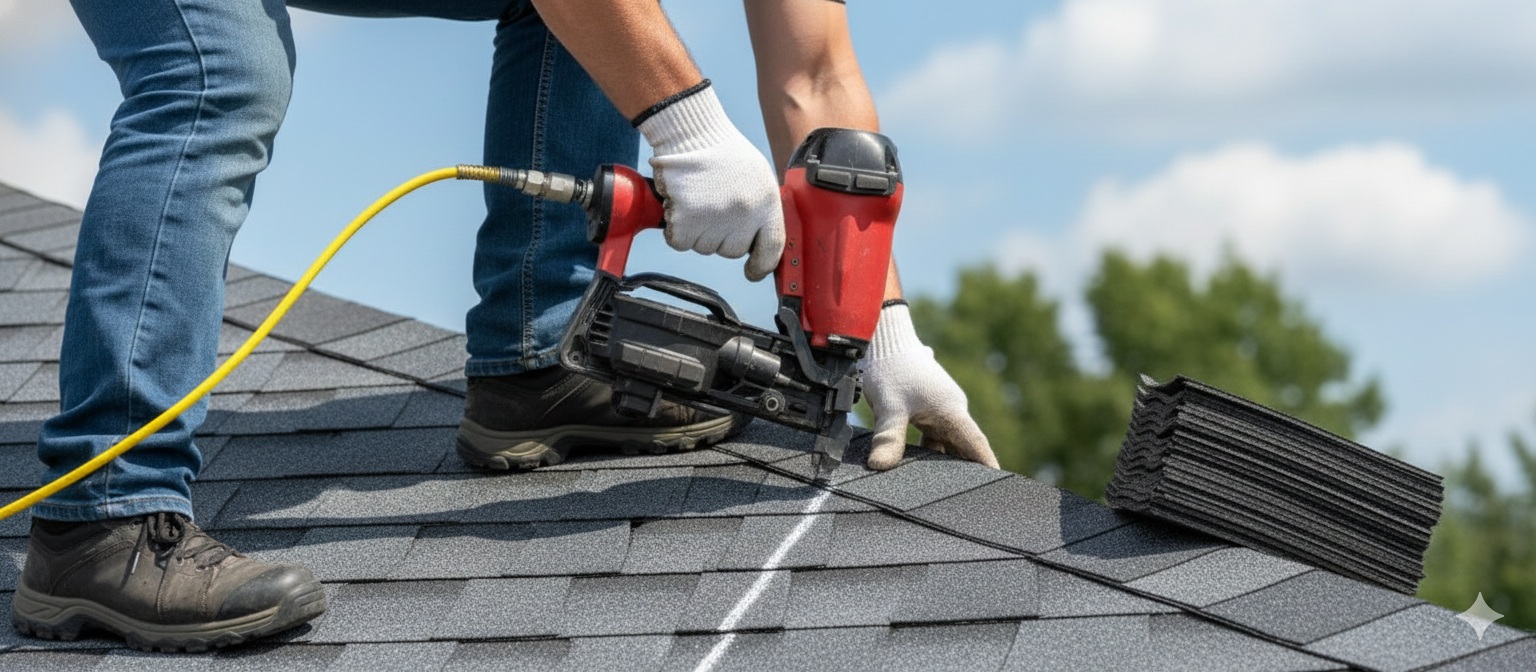
Roof replacement costs in 2026 typically range from $9,500 to $10,000, with most homeowners paying $7,500 to $14,000, or about $4 to $11 per square foot.
For storm-damaged roofs, what you pay may vary widely. An approved hail or wind claim typically leaves you responsible for the insurance deductible, while homeowners without coverage may pay the full replacement cost. Roof size, materials, location, and damage severity also affect the final price.
Since 2003, Storm Guard Roofing has restored storm-damaged roofs from inspection to final invoice, at no obligation, through local teams nationwide.
Through this guide, we will share our expertise and explain roof replacement costs, what drives pricing, and how storm claims affect the math. If you need roof replacement services, we offer a free inspection to clarify your roof’s condition and potential costs.
Most national estimates put the average cost of a roof replacement between $9,500 and $10,000. Angi reports an average of about $9,605, NerdWallet lands around $9,500, and Fixr puts a typical project at about $10,000. Most homeowners spend $7,500 to $14,000.
Across all home sizes and materials, the range is wide, from about $5,800 for a small, simple asphalt roof to $46,000 or more for a large home with a premium material.
The clearest way to think about price is in terms of square footage. Roofers price in roofing squares, where one square equals 100 square feet, so a 2,000-square-foot roof is quoted as 20 squares plus labor and tear-off.
New roof cost depends heavily on roof size, which is the first thing that moves the number:
| Roof size | Typical installed cost range |
|---|---|
| 1,500 sq ft | $6,000 to $16,500 |
| 2,000 sq ft | $8,000 to $22,000 |
| 2,500 sq ft | $10,000 to $27,500 |
These are national averages. As the next sections explain, your material choice and your roof’s complexity swing the figure, and storm damage with an approved insurance claim can change what you actually pay out of pocket.
Three things drive residential roof replacement costs more than anything else: the material you choose, the labor to install it, and the size and shape of your roof.
Material is the single biggest variable. Installed costs by material look roughly like this, according to Fixr:
| Roofing Material | Typical Installation Cost |
|---|---|
| Asphalt shingles | $6,000 to $10,000 |
| Metal (standing seam) | $14,000 to $38,000 |
| Clay or concrete tile | $14,000 to $28,000 |
| Slate | $20,000 to $60,000 |
| Wood shake | $10,000 to $30,000 |
Asphalt shingles are the default on most American homes because they balance cost and durability. Metal, tile, and slate cost more up front but last longer.
Labor can account for 40% to 60% or more of the total because replacement involves tearing off the old roof, hauling debris, installing safety measures, and installing the new system. A tear-off alone adds roughly $0.40 to $2.00 per square foot, according to Roofing Calculator.
So how much does a new roof cost? The answer depends on more than the basic roofing material. Steep or complex roofs can add about $1,000 to $3,000 because of additional labor and safety equipment. Rotten decking must also be replaced before the new roof is installed.
Underlayment, ice and water shield, flashing, and drip edge are part of a proper system, not upgrades. And most cities require a permit, usually $100 to $500, though Angi notes a few run up to $1,400.
A free inspection with an itemized scope is the only way to see exactly where your money should go, which is why we start every estimate of our roof replacement services with one.
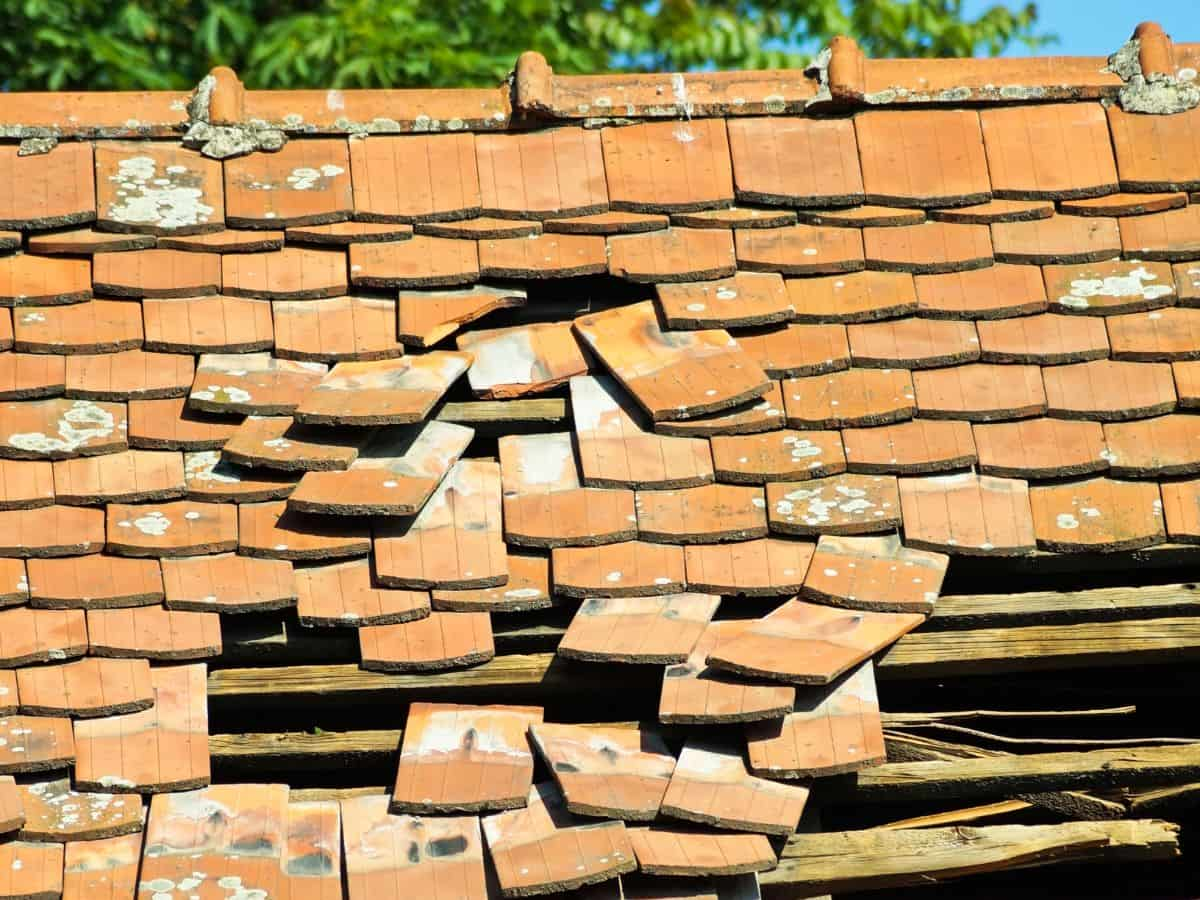
For many homeowners, a roof replacement doesn’t have to be an out-of-pocket expense. Homeowners insurance typically covers sudden, accidental damage from events such as hail or windstorms, but not gradual age-related wear and tear.
If a storm damages your roof and your claim is approved, your insurer may cover most of the cost, while you only pay your deductible. However, storm damage is not always obvious from the ground.
Hail can knock granules off shingles, leaving bald spots, dark bruises, or soft spots. It may also dent vents, gutters, and flashing.
Wind can lift, crease, or tear shingles, exposing nail heads or leaving shingles missing.
Age-related curling and granule loss are usually excluded, while damage from a defined hail or wind event may be covered.
Because storm damage can be difficult to spot, a professional free roof inspection, often using drone imagery, can help identify potential issues before you assume your roof is fine or before you file a claim.
For a storm-damaged roof, the most useful number on this page is not the sticker price. It is your deductible. With an approved claim, that is usually the amount you pay out of pocket.
The claim process is more straightforward than most homeowners expect:
Two terms largely determine how much your insurer pays:
With an RCV policy and an approved claim covering the full replacement cost, your out-of-pocket cost is usually the deductible.
Insurance generally does not cover age or normal wear and tear, so a claim tied to genuine storm damage and supported by clear documentation has the best chance of approval.
For details specific to your situation, our team can walk you through the process. However, keep in mind that the coverage depends on your policy and insurance provider, so no contractor can guarantee approval.

This is the part most cost guides leave out. A storm claim goes more smoothly when your contractor and your insurer are looking at the same damage.
Storm Guard inspects the roof, documents the damage with photos and drone imagery, and meets your adjuster on site so nothing is missed. Your role stays small: approve the scope, pay your deductible, and let the local Storm Guard team in your area handle the paperwork and coordination.
Adjusters work fast and sometimes miss line items. We compare the adjuster’s estimate against the true scope of the repair and file supplements for anything left out, such as flashing, disposal, or code-required upgrades under the current building code for a new roof.
Because we cannot begin the roof replacement project while your claim is being processed, we can install an emergency tarp to protect your roof from wind, rain, twigs, and other debris that might cause further damage. Storm Guard has been doing this work since 2003, acquiring credentials and awards through the years, so you can be confident that your roof is in good hands.
Before you sign anything, learn to read the quote in front of you. Understanding the cost of a new roof and what the quote includes can hasten the process and save you a lot of back-and-forth.
A complete roofing quote breaks out materials and labor separately and lists tear-off, disposal, underlayment, flashing, the permit, and a contingency for replacing rotted decking if the crew finds it. If a quote is a single lump sum with no detail, ask for the itemized version.
There are two warranties on every good roof. The workmanship warranty covers the contractor’s installation. The manufacturer’s warranty covers the shingle or panel itself. A strong roof replacement comes with both, and Storm Guard offers both.
When dealing with roof contractors, a few signs should give you pause:
Check twice before you commit. Get the scope of the roofing project in writing and confirm the contractor will work with your insurer on a storm claim.
When you are ready to compare a real, itemized number against your budget, find the local Storm Guard team nearest you and contact us for a free inspection and a quote on full roof replacement services.
In 2026, a roof replacement costs about $9,500 to $10,000 on average, or roughly $4 to $11 per square foot installed. Most homeowners spend $7,500 to $14,000. The final price depends on roof size, material, pitch, and complexity. Storm damage may shift most of the cost to your insurer.
Expect about $4 to $11 per square foot installed for a typical asphalt shingle roof. Premium materials such as metal, tile, or slate run higher. Roofers price by the square, which is 100 square feet, so a 2,000-square-foot roof is quoted as 20 squares plus labor and tear-off.
Often, yes, if the damage came from a covered event such as hail or wind. Insurers rarely pay for age or normal wear and tear. When a storm claim is approved, you usually pay only your deductible. Storm Guard documents the damage and works with your adjuster to support the claim.
The out-of-pocket cost you pay for a roof replacement is usually just your deductible when a storm claim is approved, not the full replacement price. On a replacement cost (RCV) policy, the insurer pays back recoverable depreciation after the work is completed and invoiced, so timing and documentation matter.
Labor is typically the largest single cost, roughly 40 to 60 percent or more of the total. It covers the tear-off of the old roof, disposal, safety setup, and installation. Material choice is the next biggest factor, with asphalt the most affordable and slate or metal the priciest.




Unless otherwise noted, each use of "Storm Guard," “us,” “we,” or “our” throughout Stormguardrc.com collectively refers to both the Storm Guard brand and the Storm Guard Franchise System, which is made up almost exclusively of independently owned and operated franchise locations.