Board and batten siding costs about $7,500 to $21,300 installed, with a national average near $12,800 for a 2,000-square-foot home in 2026. Your price depends on the material you choose, the size and height of your home, and how many windows, doors, and corners the crew has to work around. All in, most board and batten projects land between $2.50 and $12.50 per square foot, materials and labor included (Angi, 2026).
In this guide you’ll learn:
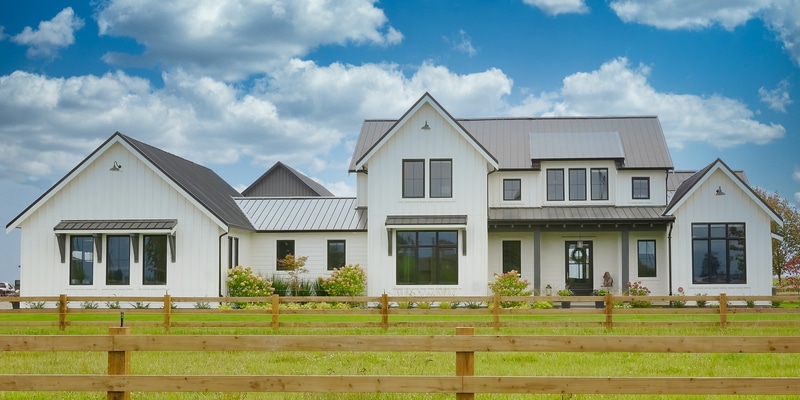
Board and batten siding is a type of exterior siding that alternates wide boards with narrow strips called “battens.” The boards are usually about one foot wide, and the battens are typically around 1/2 inch wide, though neither is a strict requirement. The boards most often run vertically, which draws the eye upward and makes a home feel taller.
This style is trendy, but it is not new. Board and batten was popular in the Victorian era and has been used on barns and other buildings since at least the 19th century, which is why it is sometimes called “barn siding.” Today it is a signature of the modern-farmhouse look.
Board and batten is a style, not a single material. You can get the look in several materials, and your choice drives both the price and how much upkeep the siding needs over time.
Fiber cement is a popular choice for board and batten. It is strong, versatile, and long-lasting, and it resists weather, fire, and heat. It can be made to look like almost any other material, including wood, and it is relatively affordable to install compared with wood or steel.
Wood is the classic option if you want a natural, rustic look. Cedar and cypress are common picks. Wood looks great, but it has trade-offs: moisture can lead to rot, termites can be a concern, and it needs more upkeep than the other options.
Steel siding is extremely durable but costs more than the other options. Like fiber cement, steel can be styled to look like different woods and colors, and it stands up well to storm damage.
If cost is your top priority, vinyl is usually the most budget-friendly choice. It resists insects and rot and is reasonably durable, though not as tough as steel or fiber cement. The main trade-off is that it offers less of that deep, rustic texture.
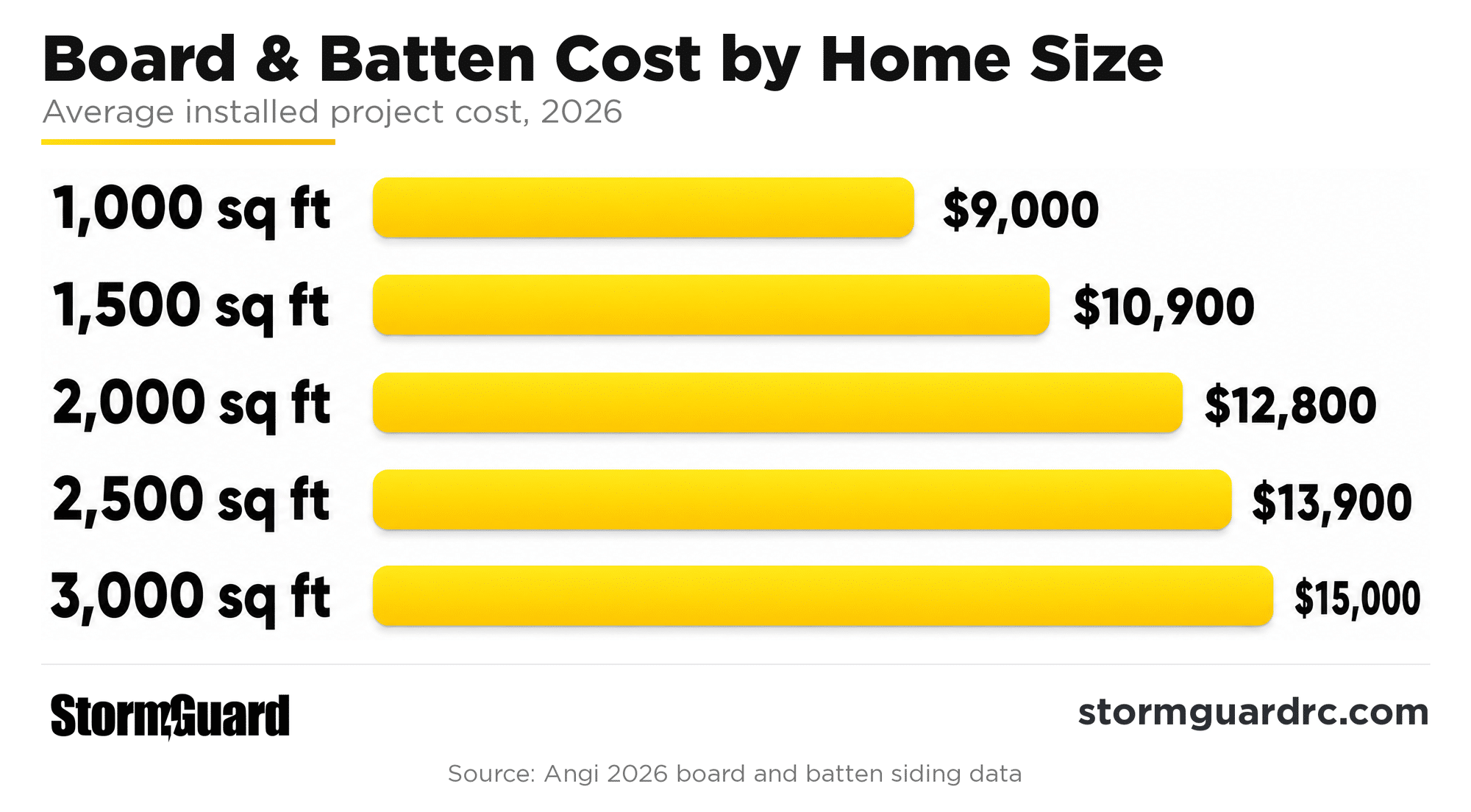
Board and batten siding averages about $12,800 for a 2,000-square-foot home, and most homeowners pay between $7,500 and $21,300 depending on material, home size, and design complexity (Angi, 2026). A small vinyl project can start near $3,000, while high-end cypress on a large home can reach $42,000.
| Home size | Average installed cost (2026) | Typical range |
|---|---|---|
| 1,000 sq ft | $9,000 | $3,000–$15,000 |
| 1,500 sq ft | $10,900 | $3,700–$18,200 |
| 2,000 sq ft | $12,800 | $4,300–$21,300 |
| 2,500 sq ft | $13,900 | $4,700–$23,200 |
| 3,000 sq ft | $15,000 | $5,000–$25,000 |
Material is the biggest single factor. The figures below are for the siding material only, before installation labor. Labor typically adds about $1.75 to $2.50 per square foot, and most contractors quote one all-in per-square-foot price.
| Material | Material cost per sq ft (2026) |
|---|---|
| Vinyl | $3–$8 |
| Engineered wood | $3–$7 |
| Cedar | $1–$10 |
| Fiber cement | $1.25–$15 |
| Metal | $1–$20 |
| Cypress | $2–$21 |
Board and batten is a strong look with real staying power, but it is not the right fit for every home or budget. Here is the honest trade-off.
Yes. New siding is consistently one of the stronger exterior projects for resale, and board and batten typically returns about 70 to 80 percent of its cost, depending on the material you choose (Angi, 2026). Beyond the numbers, the modern-farmhouse look helps a home stand out, which can matter just as much when it is time to sell.
Now that you know the look, the materials, and the real 2026 costs, contact your local Storm Guard for a personalized quote. If you are still comparing options, our guides to the four main types of house siding and siding replacement cost can help you narrow it down.
Nationally, board and batten siding runs about $7,500 to $21,300 installed, with an average near $12,800 for a 2,000-square-foot home in 2026. All in, most projects fall between $2.50 and $12.50 per square foot. Material, home size, and design complexity drive the final number.
Usually, yes. Board and batten uses more material and takes longer to install because of the alternating wide boards and narrow battens, so it typically costs more than standard lap siding in the same material. The exact gap depends on the material and your home.
Vinyl is normally the most budget-friendly choice for board and batten. It resists insects and rot, installs quickly, and holds up reasonably well, though it offers less of the deep, rustic texture you get from wood or fiber cement.
Lifespan depends on the material. Vinyl and fiber cement commonly last several decades with routine care, steel is highly durable, and natural wood lasts well when it is kept sealed and protected from moisture. A professional installation and regular upkeep matter as much as the material itself.
Yes. New siding is one of the stronger exterior upgrades for resale, and board and batten typically returns about 70 to 80 percent of its cost, depending on the material. The clean, modern-farmhouse look also helps a home stand out to buyers.
It is possible for an experienced DIYer, but siding is your home’s first defense against water and weather, and mistakes can lead to leaks, rot, and voided warranties. For most homeowners, professional installation is the safer, longer-lasting choice.




Unless otherwise noted, each use of "Storm Guard," “us,” “we,” or “our” throughout Stormguardrc.com collectively refers to both the Storm Guard brand and the Storm Guard Franchise System, which is made up almost exclusively of independently owned and operated franchise locations.