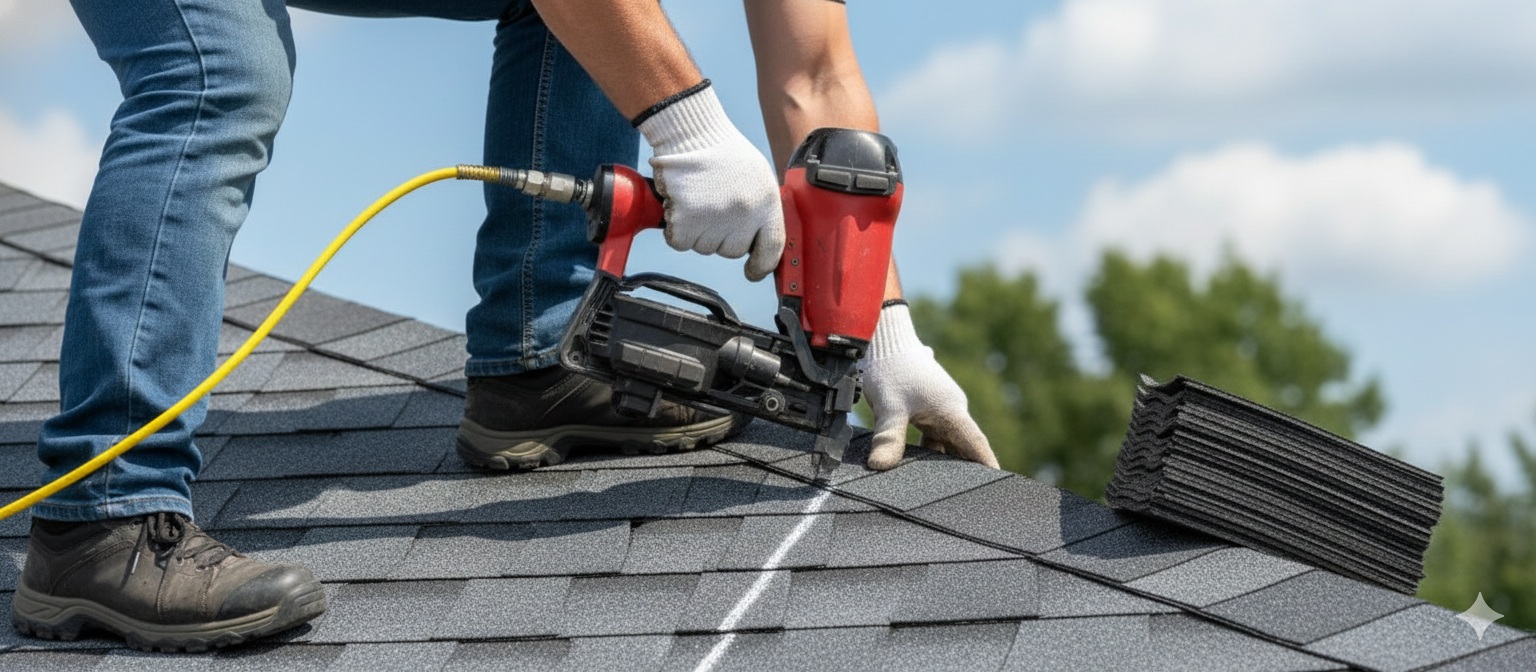

Hail damage on a roof shows up as round bruises and dark spots where the shingle granules have been knocked off, plus dents on soft metals such as vents, flashing, and gutters. Much of it cannot be seen from the ground. If a storm dropped hail about one inch across or larger near your home, document what you can safely see and get a professional inspection before your insurer’s reporting deadline passes.
Storm Guard inspects hail-damage roof problems across a national franchise network in hail-prone regions. This guide goes past “what does it look like?” and walks you through the whole sequence: spotting the damage, checking it safely, documenting it for your insurer, and deciding between repair and replacement.
If you already know the roof is damaged, start with our guide to storm and hail damage roof repair.
Hail damage looks like scattered, roughly circular marks where the impact crushed or bruised the shingle, often with granules missing and the dark mat showing through. On the metal parts of the roof, hail leaves round dents.
Asphalt shingles show hail in a few consistent ways:
Hail is common enough that this matters for most homeowners. NOAA’s Storm Prediction Center logged 5,432 hail events in 2025, and State Farm alone paid billions in hail claims that year. Hail marks are random, usually more concentrated on the side of the roof that faced the storm.
Soft metals are the easiest to confirm hail on. Roof vents, ridge vents, flashing, gutters, downspouts, and the fins on your air conditioner condenser can all get dented on impact. This is the “soft metal test” inspectors often use to estimate hail size and direction.
The National Weather Service classifies a thunderstorm as severe when it produces hail at least one inch in diameter, about the size of a quarter. Roof damage becomes likely at that size, though smaller hail can still harm older shingles, especially when driven by wind.
Not every dark spot is hail. Normal weathering causes even granule loss across the whole roof. Blistering creates small raised bubbles that pop open, usually from heat or poor ventilation. Foot traffic and mechanical damage leave scuffs in straight lines or clusters near roof access points.
Hail marks differ because they are random, roughly round, and paired with dents on nearby metal. Telling them apart takes a close, hands-on look, which is why a documented inspection matters more than a quick glance from the yard.
The safest way to tell if your roof has hail damage is to start on the ground: check gutters, downspouts, vents, the AC unit, siding, and window screens for dents before you think about the roof itself. Those clues confirm whether hail was large enough to damage shingles.
Wait until the storm has fully passed and it is safe to go outside. Then, walk the property with your phone camera:
Photograph everything you find with a coin or ruler for scale, and note the date and time of the storm.
A clean ground check does not prove the roof is fine. Shingles can bruise without any visible dents below, especially on slopes you cannot see from the yard. If hail near 1 inch in diameter fell in your area, an inspection is still worth booking.
Do not climb onto a wet, steep, or damaged roof. Hail can loosen granules and leave the surface slick, and a fall is a far bigger risk than any missed bruise. Call a professional if your ground check found dents on metal, granules in the gutters, damaged siding or screens, or any interior leak.
It’s also worth calling if neighbors are having roofs inspected or replaced after the same storm. Hail often falls in narrow bands, and homes on the same street tend to see similar damage.
A trained inspector can safely walk the roof field, test sections for hits, and distinguish hail bruising from wear. Storm Guard provides a written inspection report with dated photos that you can share with your insurer.
Choose your contractor with care after a storm. Check reviews and licensing, ask for proof of insurance, and never sign a document at the door without having time to read it.
Hail affects each roofing material differently: asphalt shingles bruise and lose granules, metal dents, tile and slate crack, and wood shakes split. Age matters as much as material, because older, brittle roofs break under smaller hail.
| Material | How hail damages it | What to watch for |
|---|---|---|
| 3-tab asphalt shingles | Thinner, single-layer shingles bruise, crack, and lose granules more easily | Dark spots, soft spots, torn tabs |
| Architectural asphalt shingles | Thicker, layered build resists better, but mat fractures still occur | Granule loss, bruising on the top layer |
| Impact-resistant (Class 4) shingles | Built to resist cracking under the UL 2218 impact test | Surface marks: inspect after very large hail |
| Metal roofing | Dents are common; panels usually keep shedding water | Dents, cracked coatings, or damaged seams and fasteners |
| Clay and concrete tile | Hard and heavy, but brittle under direct impact | Cracked, chipped, or broken tiles |
| Wood shakes | Dry, weathered shakes split along the grain | Fresh splits with sharp, light-colored edges |
Roof age is the hidden variable. Asphalt shingles lose flexibility as they age in the sun, so a 15-year-old roof can crack under hail that a newer roof withstands. For a deeper look at lifespan and storm performance, see our roofing materials comparison guide.
Hail rarely arrives alone. Strong wind drives hailstones at an angle, which increases the force on the storm‑facing slope, siding, and windows. Wind also lifts shingle tabs and breaks the adhesive seal, leaving creased shingles that let water in long after the storm.
Look for lifted, creased, or missing shingles, debris on the roof, and bent flashing alongside the classic hail marks. A storm that combines wind and hail often damages several parts of the exterior at once, and severe events such as tornadoes can tear away whole sections of a roof. If your roof is open to the weather, see our steps for emergency roof repairs after a storm.
Material choice at replacement time is your chance to reduce future storm losses, which is where Class 4 shingles come in.
To support a hail damage roof insurance claim, record the storm date, photograph every damaged surface, keep receipts for emergency repairs, and report the damage to your insurer before your policy’s deadline. Coverage and deadlines vary, so check your own policy with your insurer.
Good documentation starts the day of the storm:
Keep everything in one folder, digital or paper: photos, notes, receipts, the inspection report, and every message with your insurer. A clear record makes follow-up questions easier to answer.
Most homeowner policies set a time limit for reporting storm damage, and the limit varies by insurer and state. Find it on your policy documents or ask your agent, then report the damage as soon as you can. Hail damage can take months to turn into a leak, and waiting makes it harder to tie the damage to a specific storm.
Some policies also limit or exclude cosmetic damage, such as dents in metal that do not affect the roof’s ability to shed water. Read those terms before you decide how to proceed, and ask your insurer if anything is unclear.
Your insurer will usually send an adjuster to inspect the roof and decide what the policy covers. Have your photos, storm date, and receipts ready. A contractor who has already inspected the roof can point out damage that is easy to miss, such as bruised shingles on a back slope or dented flashing.
If you believe the adjuster missed damage, ask your insurer how to request a review and share any additional photos or findings.
Storm Guard can meet the adjuster on site and walk the roof with them, using the written inspection report and photos as references. Decisions about coverage stay between you and your insurer. Once the scope is set, our roofing services team can complete the repair or replacement.
A roof with a few isolated hits can usually be repaired, but widespread bruising across several slopes usually calls for replacement. If you are replacing anyway, upgrading to Class 4 impact-resistant shingles reduces the risk of repeat hail damage.
Repair makes sense when damage is limited to a small area, the roof is relatively young, and matching shingles are still available. On the other hand, replacement makes sense when hits are spread across most slopes, the shingles are older and brittle, there are leaks or soft decking, or replacement shingles will not match.
Hail also shortens the life of a roof that does not leak yet. Granule loss exposes asphalt to UV, and bruised mats crack over the next few seasons, so a roof that looks fine after a storm may age years faster.
Patching many scattered hits on an older roof often costs more over time than a single replacement, and mismatched repairs can affect curb appeal and resale value. An inspection report that maps the damage by slope makes this decision clearer.
Impact resistance for roofing is rated under the UL 2218 standard, and Class 4 is the highest rating. To earn this, a sample is struck twice in the same spot by a two-inch steel ball dropped from 20 feet and must show no cracking. Class 4 products are available in asphalt shingles, metal, and synthetic roofing.
The Insurance Institute for Business and Home Safety (IBHS) researches how roofing products hold up to hail, serving as a useful reference when you want to compare performance beyond the label. A Class 4 rating improves resistance; it does not make a roof hail-proof, and very large hail can still cause damage.
Storm Guard installs Class 4 impact-resistant shingles and can walk you through options that fit your home and budget.
Many insurers offer a premium discount for a Class 4 roof, but the amount, the documentation required, and whether it applies at all vary by insurer and state. Ask your insurer what they offer and what paperwork they need before you buy, such as the product’s certification and installation records. Confirming this in advance helps ensure any credits or coverage apply without delay.
Hail damage roof repair costs depend on how much of the roof was hit, the roof’s size and pitch, the material, and whether gutters, vents, and siding also need work. A few replaced shingles and a full tear-off are very different jobs.
Speed matters, too. A bruised shingle left alone can crack and leak, and water damage to decking, insulation, and ceilings adds cost unrelated to the original hail.
If your insurer approves a hail claim, your share generally depends on your deductible and on anything the policy does not cover, such as upgrades. Policies pay out differently, so confirm the details with your insurer.
Hail that damages a roof rarely stops there. Dented gutters lose their shape and drain poorly, and cracked siding lets water into the walls. Window screens, frames, and painted trim often take hits as well. Scope the whole exterior at once so nothing gets missed, and keep all items together in the same inspection report and photo set. Storm Guard also handles storm gutter repair and siding work.
The only reliable way to know what your hail repair will cost is to have the roof checked in person. Schedule a free inspection with your local Storm Guard team to get the damage documented with photos and a written estimate for the repair or replacement.
It looks like round bruises or dark spots where the shingle has lost its granules and exposed the black mat underneath, sometimes with cracks. On metal parts such as vents, flashing, and gutters, it shows as dents. Much of it is hard to see from the ground, so a close inspection is best.
Start at ground level. Check gutters, downspouts, vents, and the AC unit fins for dents, and look at siding and window screens for impact marks. These confirm hail size and likely roof damage. For the roof itself, use binoculars or book a professional inspection rather than climbing.
Hail one inch across, about the size of a quarter, is where roof damage becomes likely; the National Weather Service classifies hail that size as severe. Smaller hail can still harm older or brittle shingles, and wind raises the risk, so inspect after any significant hailstorm.
It depends on your policy and state, so check your policy documents or ask your insurer. Report the damage as soon as you can: note the storm date, photograph the damage, and contact your insurer before the reporting window closes.
For many homes in hail-prone areas, yes. Class 4 shingles carry the highest UL 2218 impact rating and resist cracking from hail better than standard shingles. Many insurers offer a premium discount for them, though it varies by insurer and state. If you are already replacing a hail-damaged roof, upgrading is worth pricing out.
Many homeowner policies cover sudden hail damage, minus the deductible, but coverage varies. Some policies limit cosmetic damage or roofs past a certain age. Document the damage and storm date, and confirm your coverage with your insurer. A contractor can meet your adjuster on-site to point out the damage.
Hail damage that is invisible today can become a leak next season. A documented inspection tells you what the storm did, gives you photos to share with your insurer, and helps you decide between repair, replacement, and a Class 4 upgrade.
Schedule an inspection today! Find the Storm Guard team that serves your area through our locations page.




Unless otherwise noted, each use of "Storm Guard," “us,” “we,” or “our” throughout Stormguardrc.com collectively refers to both the Storm Guard brand and the Storm Guard Franchise System, which is made up almost exclusively of independently owned and operated franchise locations.