
The four types of house siding most homeowners compare are vinyl, fiber cement, wood, and brick. Vinyl costs the least, fiber cement balances durability and price, wood gives the most natural look but needs the most care, and brick lasts the longest with the least routine upkeep. The right choice depends on your budget, your climate, and how much storm exposure your home gets.
Those four are not the only options. Stucco is just as common on new homes, especially in the South and West, and we cover it with metal and engineered wood further down. But if you are replacing siding on an existing frame house, these four are the materials you are most likely to be choosing between.
Vinyl is the most-used siding on new homes, but only narrowly. For single-family homes started in 2025, the principal exterior wall material was vinyl on 27.7 percent, stucco on 24.1 percent, fiber cement on 22.6 percent, brick or brick veneer on 16.8 percent, and wood on 5.9 percent, according to U.S. Census Bureau data analyzed by the National Association of Home Builders. Every other material, metal included, had less than a 2 percent share.
Those numbers describe new construction. Older neighborhoods have far more wood and brick, and what is popular nearby can affect resale, so look at the homes around yours too.
| Material | Upfront cost | Upkeep | Hail and impact | Best for |
|---|---|---|---|---|
| Vinyl | Lowest | Low: wash yearly | Can crack, especially in cold | Tight budgets, easy upkeep |
| Fiber cement | Mid | Low to moderate: repaint every so often | Rigid, resists dents and cracks | Durability and resale value |
| Wood | Mid to high | High: regular paint or stain | Can split or gouge | Natural look, historic homes |
| Brick veneer | Highest | Very low | Very resistant | Longest life, least maintenance |
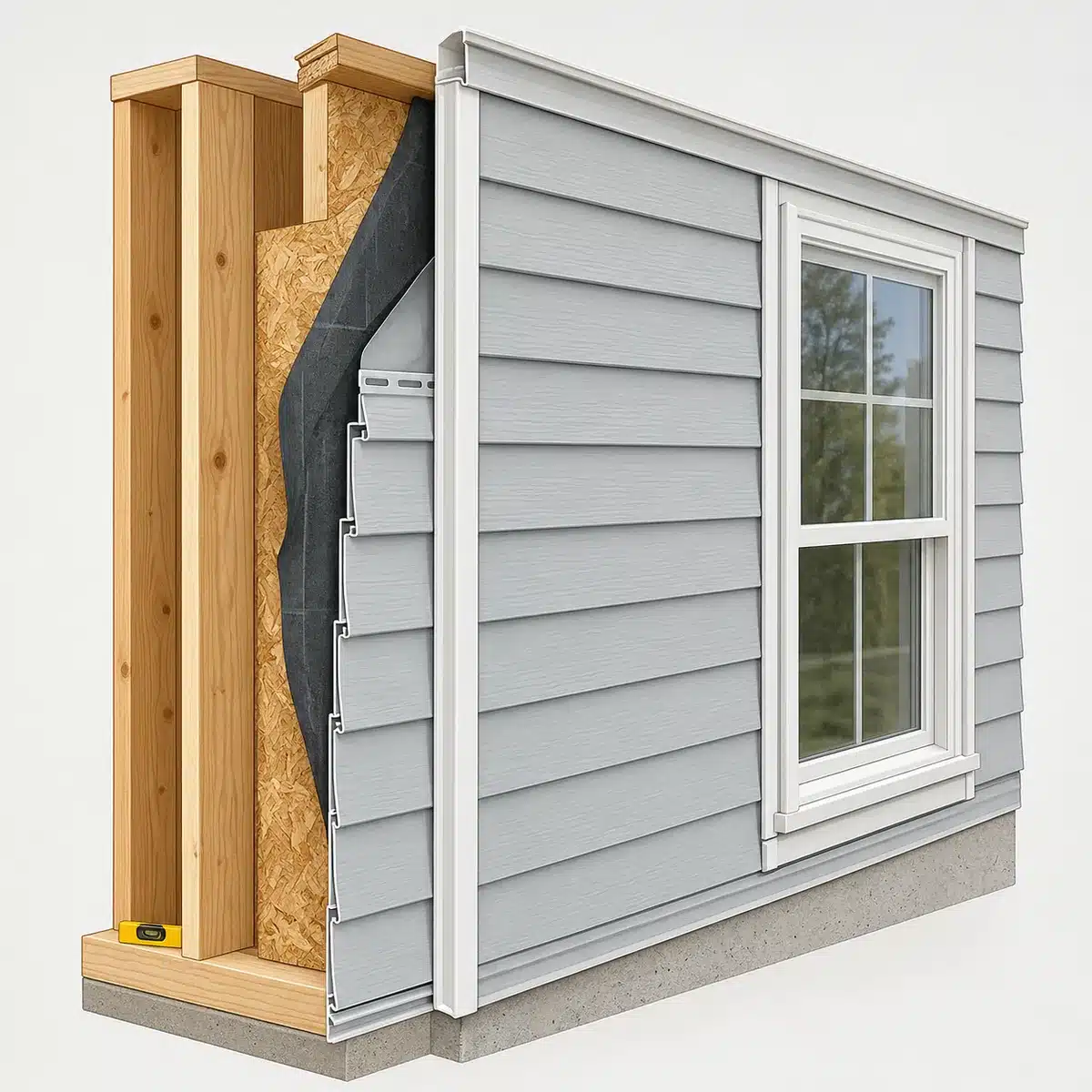
Vinyl is the least expensive siding to buy and install, and it needs little more than a yearly wash. It does not rot, insects do not eat it, and modern panels come in clapboard, Dutch lap, shake, and board-and-batten profiles, so it no longer has to look like the flat plastic siding of decades past.
The tradeoffs are real. Vinyl is a thin plastic panel, so it can crack or puncture when hail hits it, and it gets more brittle in cold weather. Strong sun can fade darker colors over time, and heat reflected from windows or a grill can warp panels. Insulated vinyl, which adds a foam backer, stiffens the panel and makes it harder to dent.
When you compare products, look for vinyl certified through the VSI Product Certification Program run by the Polymeric Exterior Products Association, which is verified by an independent third party and confirms the siding meets the ASTM D3679 standard, including wind load and impact testing.
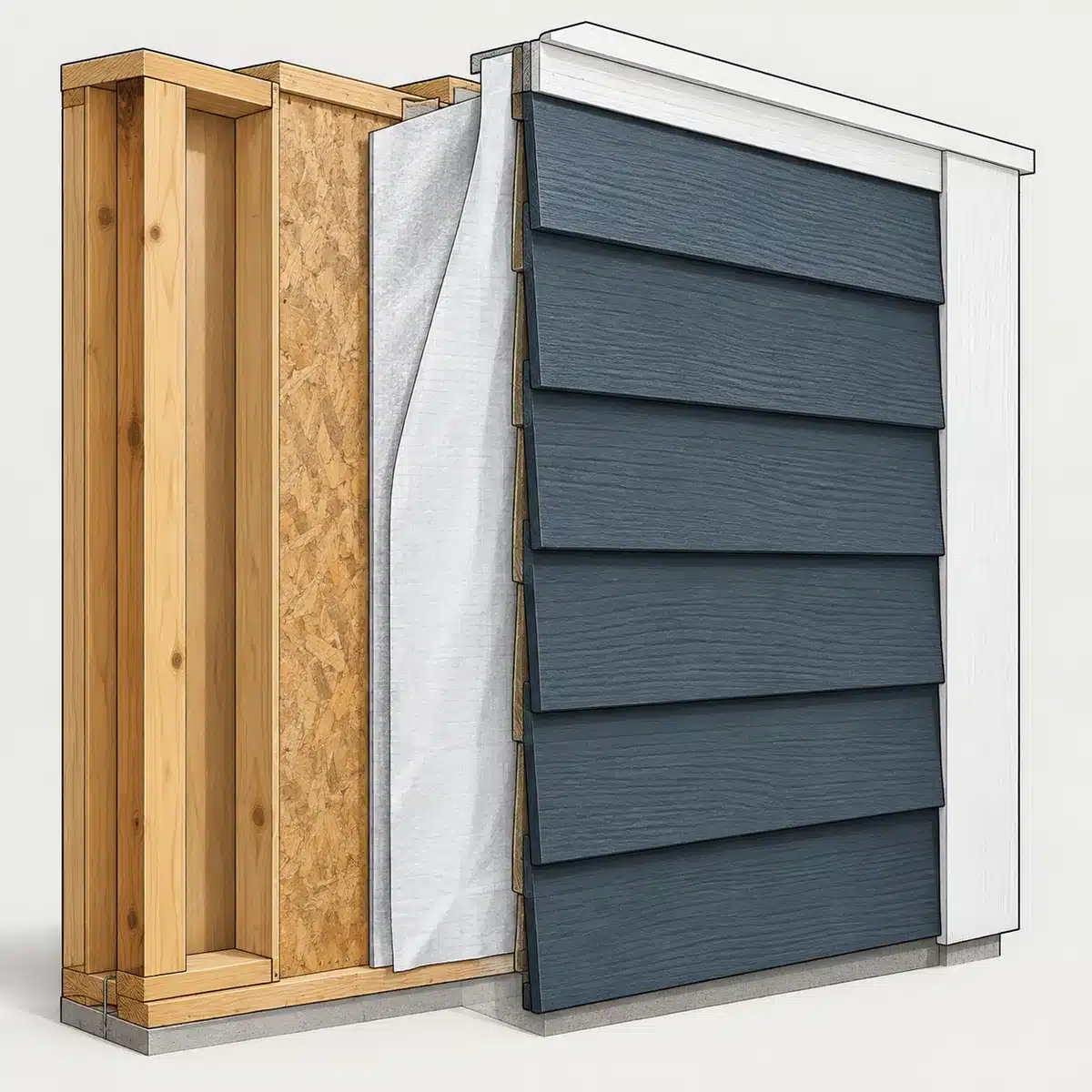
Fiber cement is made from cement, sand, and wood fibers, and it is the most common step up from vinyl. It resists rot, termites, and impact, and it will not melt or burn: James Hardie, the best-known brand, states that its siding complies with ASTM E136 as a noncombustible material and backs it with a 30-year non-prorated limited warranty on the board itself.
It used to be true that fiber cement had to be primed and painted after installation. Today it ships either primed or factory-finished, with the color baked on at the factory. Painted boards still need repainting every so often as the finish wears.
The main downside is installation. The boards are heavy, cutting them makes silica dust that crews must control, and the warranty depends on following the manufacturer’s instructions, so hire a crew that installs it regularly.
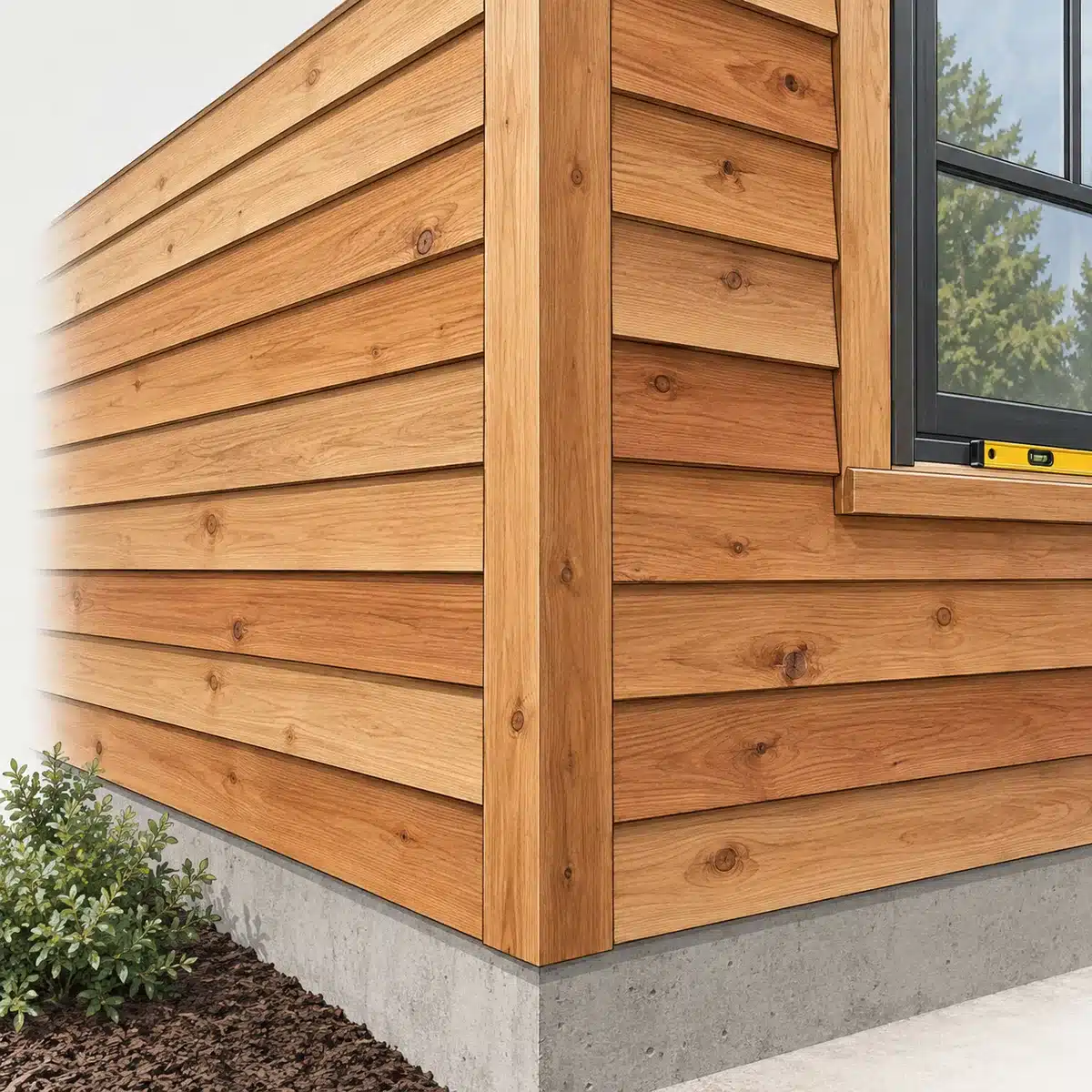
Wood, most often cedar, gives the warmest and most natural look, and you can paint or stain it any color. It is the right choice for many historic homes, and individual boards are easy to replace.
It also needs the most care. Wood has to stay sealed with paint or stain, and it is vulnerable to rot, insects, and woodpeckers where water gets in. How long it lasts depends almost entirely on that upkeep and on keeping water off it, which is why we do not quote a single lifespan for it. Engineered wood siding gives a similar look with treated, more moisture-resistant boards.
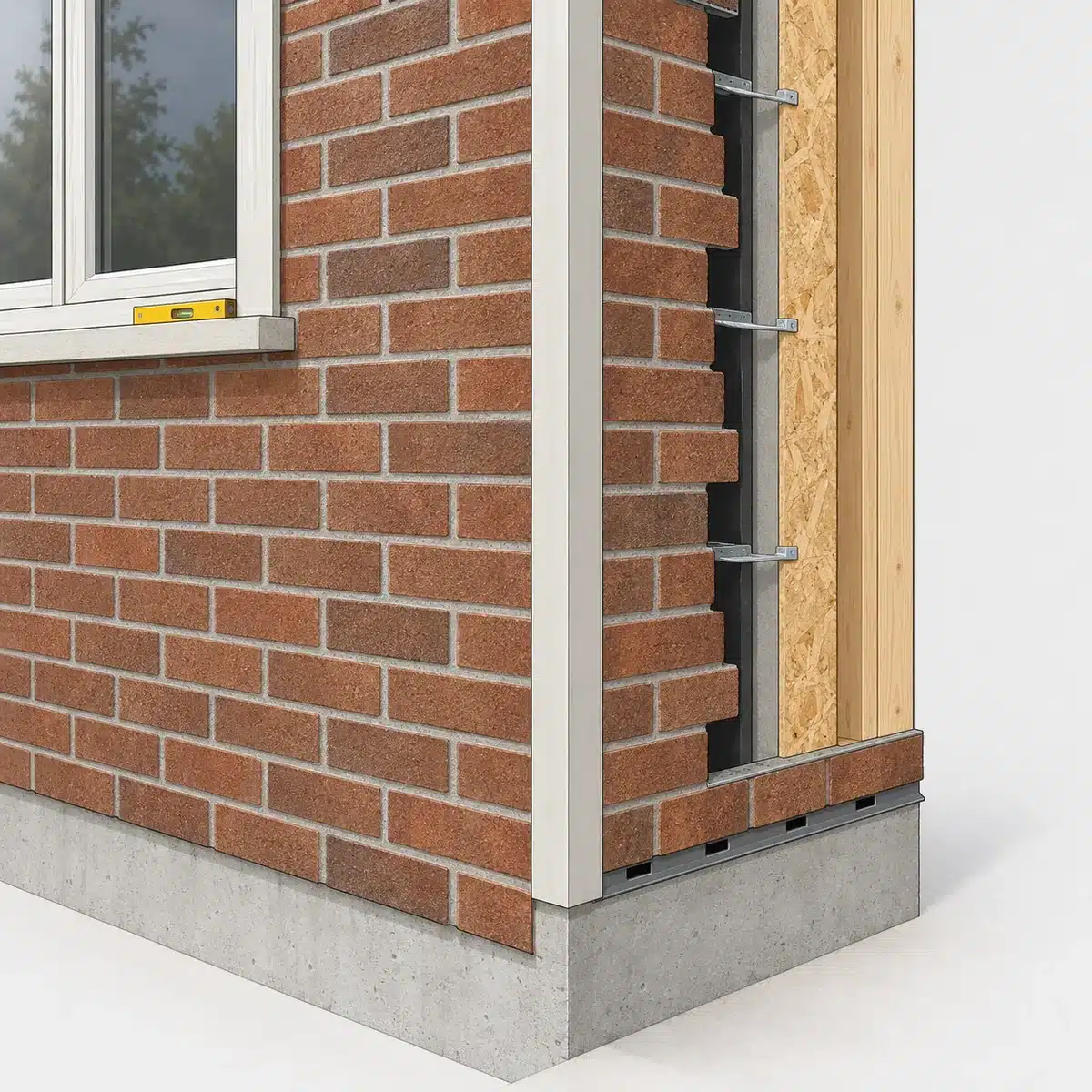
On most modern houses, “brick siding” is brick veneer: a single layer of brick built just outside a wood-framed wall. The brick does not hold up the house. Building codes require it to be tied to the frame with metal wall ties and to leave an air space behind it so water that gets through the brick can drain out. At the bottom, flashing and small weep openings let that water escape. The International Residential Code (section R703.8) sets the details, including corrugated tie spacing (no more than 24 inches apart, with each tie supporting no more than 2.67 square feet of wall) and weep openings no more than 33 inches apart, and the Brick Industry Association’s Technical Note 28 recommends going beyond those minimums in places.
Brick is the longest-lasting option here. The Brick Industry Association estimates brick walls go 100 to 150 years or more before needing repair, and notes that well-built brickwork needs very little maintenance. The one recurring job is mortar: according to the BIA, joints typically last more than 25 years before they may need repointing. Brick usually has the highest upfront cost of the four, and because it is a masonry system rather than panels, it is usually chosen for new construction or additions rather than as a straight siding swap.
Vinyl is the cheapest to install, fiber cement and wood sit in the middle, and brick costs the most. Your own price depends on wall area, the number of stories, trim and window details, tearing off the old siding, and any sheathing repairs found underneath.
Siding also pays some of its cost back when you sell. In the Zonda 2025 Cost vs. Value Report, which reports national averages for a typical siding job, fiber cement siding replacement cost $21,485 and recouped 113.7 percent of that at resale, while vinyl cost $17,950 and recouped 96.5 percent. Returns vary by market.
When you collect bids, ask for itemized quotes that separate material, labor, tear-off, and trim so you can compare them line by line.
These are InterNACHI’s estimates for well-maintained materials. Real life is often shorter on walls that take hail, constant sun, or trapped moisture, and installation quality matters as much as the material.
| Material | Estimated life | What shortens it |
|---|---|---|
| Vinyl | About 60 years | Sun fading, heat warping, hail cracks |
| Fiber cement | 100+ years | Poor flashing, unsealed cut edges, skipped repainting |
| Wood | Depends on upkeep | Moisture, rot, insects, skipped sealing |
| Brick veneer | 100+ years | Failed flashing or blocked weeps; mortar needs repointing over time |
| Stucco | 50+ years | Cracks that let water behind it |
In Florida, InterNACHI publishes a separate, shorter chart, so use local estimates if you live in a hot, humid coastal climate.
Brick and fiber cement handle hail best because they are rigid and hard. Vinyl is the most likely of the four to crack, especially in cold weather, and wood can split or gouge and then let water in. Wind is as much about installation as material: panels have to be fastened exactly as the manufacturer specifies, and vinyl must be hung loosely enough to expand and contract.
Siding damage often shows up alongside roof damage, so check both after a storm. Look for cracked or holed panels on the sides that faced the storm, dented gutters and downspouts, and torn window screens. Our guide on how to know if hail has damaged your roof walks through a safe check from the ground.
If you plan to file an insurance claim, a written inspection report with photos helps you show your insurer what happened. Storm Guard can inspect and document the damage for you. Coverage, deductibles, and how a policy handles siding that can no longer be matched vary by policy and by state, so review your own policy with your insurance company or agent. Learn more about storm and hail damage repair.
Improper installation is a common reason a siding warranty does not pay out. James Hardie’s installation instructions state that failing to install and finish its product according to building codes and its written instructions may void the product warranty. CertainTeed’s vinyl siding warranty excludes installation that does not strictly follow its written instructions, and it is voided on panels painted or coated without the company’s authorization. Read your warranty before you paint, patch, or hire an installer.
Signs it may be time to replace rather than repair: warped or buckling panels, rot or mold that keeps coming back, moisture stains inside, and repeated repairs to the same walls. If damage covers more than a few panels, or the product is discontinued and cannot be matched, replacement often makes more sense than patching. Our siding repair team can tell you which it is.
The four most compared types are vinyl, fiber cement, wood, and brick veneer. Stucco is also common on new homes, mainly in warm, dry regions.
Vinyl, but narrowly. It was the main exterior material on 27.7 percent of single-family homes started in 2025, just ahead of stucco at 24.1 percent and fiber cement at 22.6 percent, per Census data analyzed by NAHB.
Vinyl. The tradeoff is lower impact resistance, so the cheapest upfront option is not always the cheapest over 20 years once storm repairs are counted.
Brick and fiber cement. InterNACHI estimates 100 or more years for both when well maintained, compared with about 60 years for vinyl.
Not anymore. It is sold primed for painting or with a factory-applied color finish. Painted boards need repainting every so often.
Yes. Many homes combine materials, such as brick on the lower front wall with fiber cement or vinyl above, or shake accents on the gables.
Comparing materials or dealing with storm damage? A professional inspection shows what your walls need and which siding will hold up where you live. See the siding types we install, find your local Storm Guard team, and Schedule an Inspection Today!




Unless otherwise noted, each use of "Storm Guard," “us,” “we,” or “our” throughout Stormguardrc.com collectively refers to both the Storm Guard brand and the Storm Guard Franchise System, which is made up almost exclusively of independently owned and operated franchise locations.