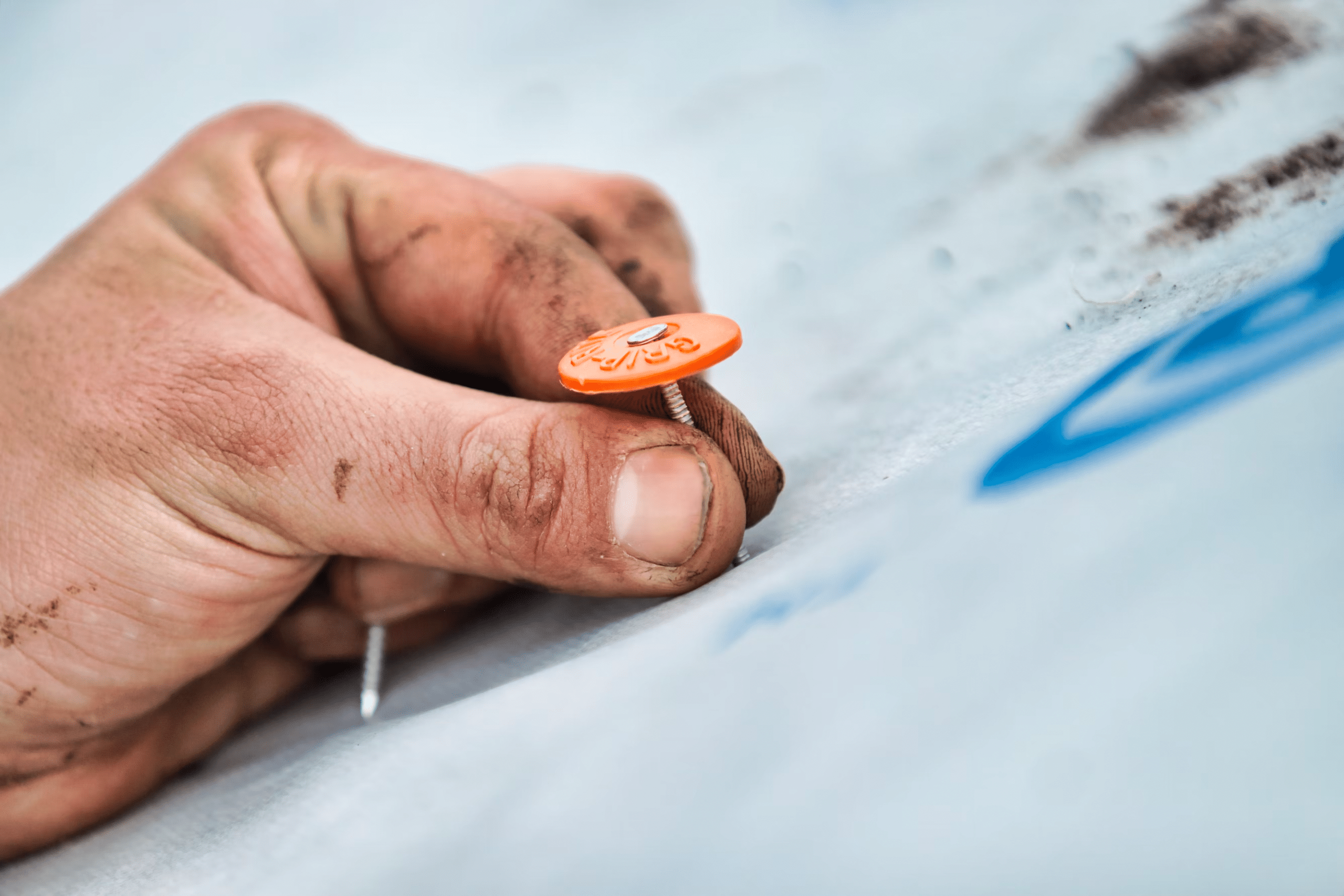
Ryan Engelbrecht, owner of Storm Guard Southern Wisconsin, knows that quality matters when it comes to your exterior projects. One of the many details that has been perfected in the 30+ years Ryan has worked in the industry, is the decision to choose a superior roofing nail for your projects. Corrugated roofing nails, also known as ‘Ring-Shank’ nails, take precedence over a common non-corrugated nail. See comparison photo below for reference.
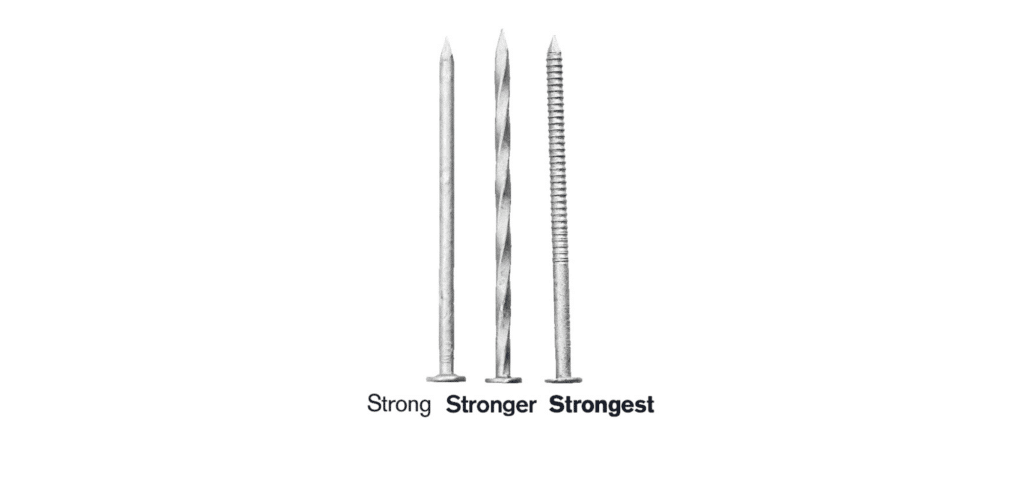
Not only do these nails provide superior gripping strength as a result of their corrugated design, but they also are processed as ‘hot-dipped galvanized’ steel. During the manufacturing process, the nails are dipped in a molten 842℉ bath containing a high concentration of zinc. The zinc provides a protective layer to combat deterioration due to the elements. To put this in layman’s terms, the nails are built to have a long, low-maintenance life.
In short, it’s apparent that when it comes to building your new roof, something as little as a nail makes all the difference defending your property against mother nature. Storm Guard Roofing & Construction will build you a durable, high-quality roof and we’d be happy to come out to your property for a complimentary consultation. We genuinely care and will take extra time and attention to detail to make your home like new again.
Sources:
Three things decide whether a nail does its job: the metal it is made of, the shape of its shank, and how it is installed.
When shingles blow off in a storm, the wind usually did not tear them apart. It found shingles the fasteners had already let go of. That is why nail choice and placement matter so much.
Every shingle has a marked strip, the nailing zone, where the nails belong. Nails set too high miss the course below and lose their grip, and nails driven too deep cut into the shingle. Either mistake quietly weakens the roof. A standard roof uses four nails per shingle, while high-wind areas (where the basic wind speed is 110 mph or more) call for six nails, placed to the manufacturer and code specifications. More nails, set correctly, mean more hold.
Nails and sealant work as a team: the nails hold each shingle to the deck, and the self-sealing adhesive bonds the shingles to one another. You can read more about that bond in our guide to how long it takes a roof to seal.
You do not need to be an expert to ask a few smart questions. A quality contractor will have a clear answer for each:
Storm Guard uses hot-dipped galvanized ring-shank nails and installs them to manufacturer and code specifications, because the small details are what keep a roof on in a storm.
Storm Guard uses corrugated roofing nails, also known as ring-shank nails, rather than common non-corrugated nails, because they hold far better.
Their corrugated, ringed design gives superior gripping strength, which holds the roofing down more securely and helps it resist being lifted by wind.
During manufacturing, the nails are dipped in a molten bath of about 842 degrees Fahrenheit with a high concentration of zinc. That zinc coating protects against deterioration from the elements, giving the nails a long, low-maintenance life.
Yes. Something as small as a nail makes a real difference in defending your property against the weather, which is why quality fasteners are part of building a durable, high-quality roof.




Unless otherwise noted, each use of "Storm Guard," “us,” “we,” or “our” throughout Stormguardrc.com collectively refers to both the Storm Guard brand and the Storm Guard Franchise System, which is made up almost exclusively of independently owned and operated franchise locations.